
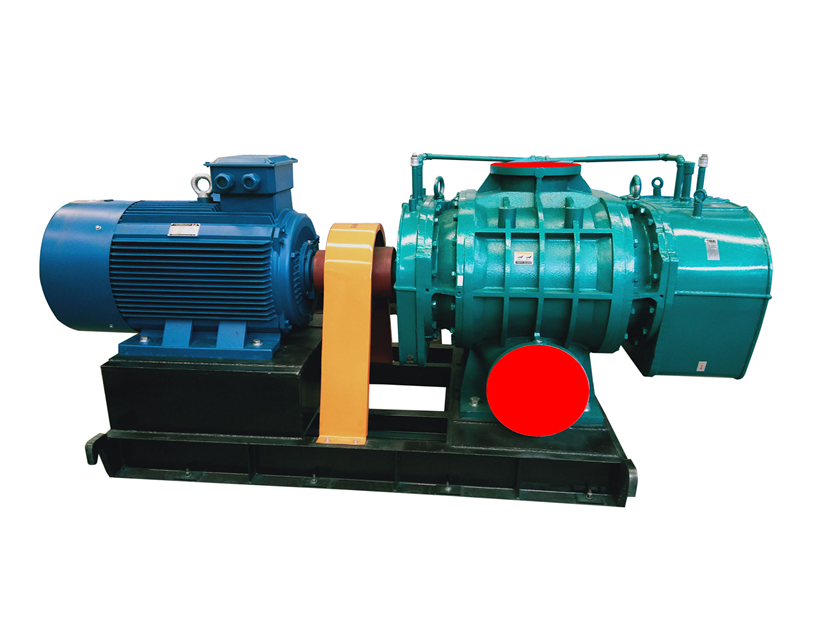
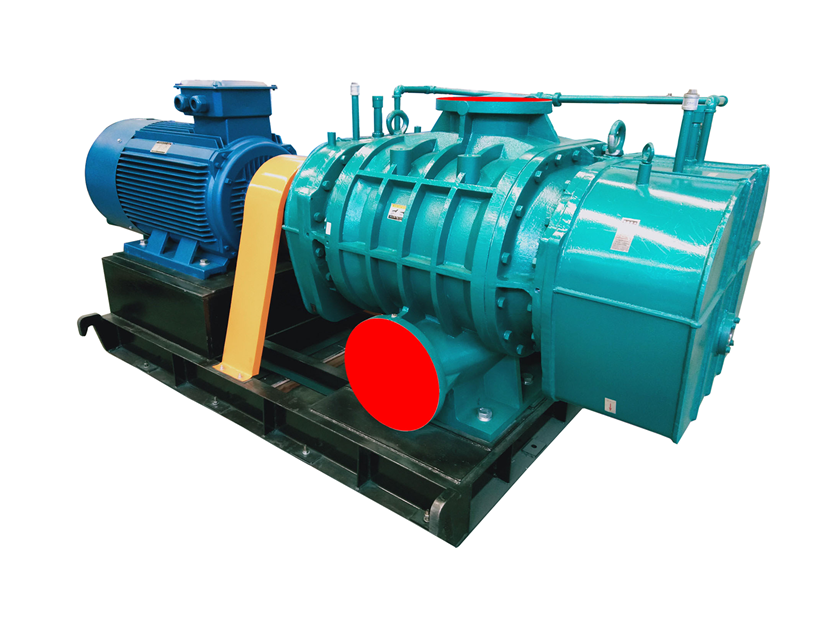
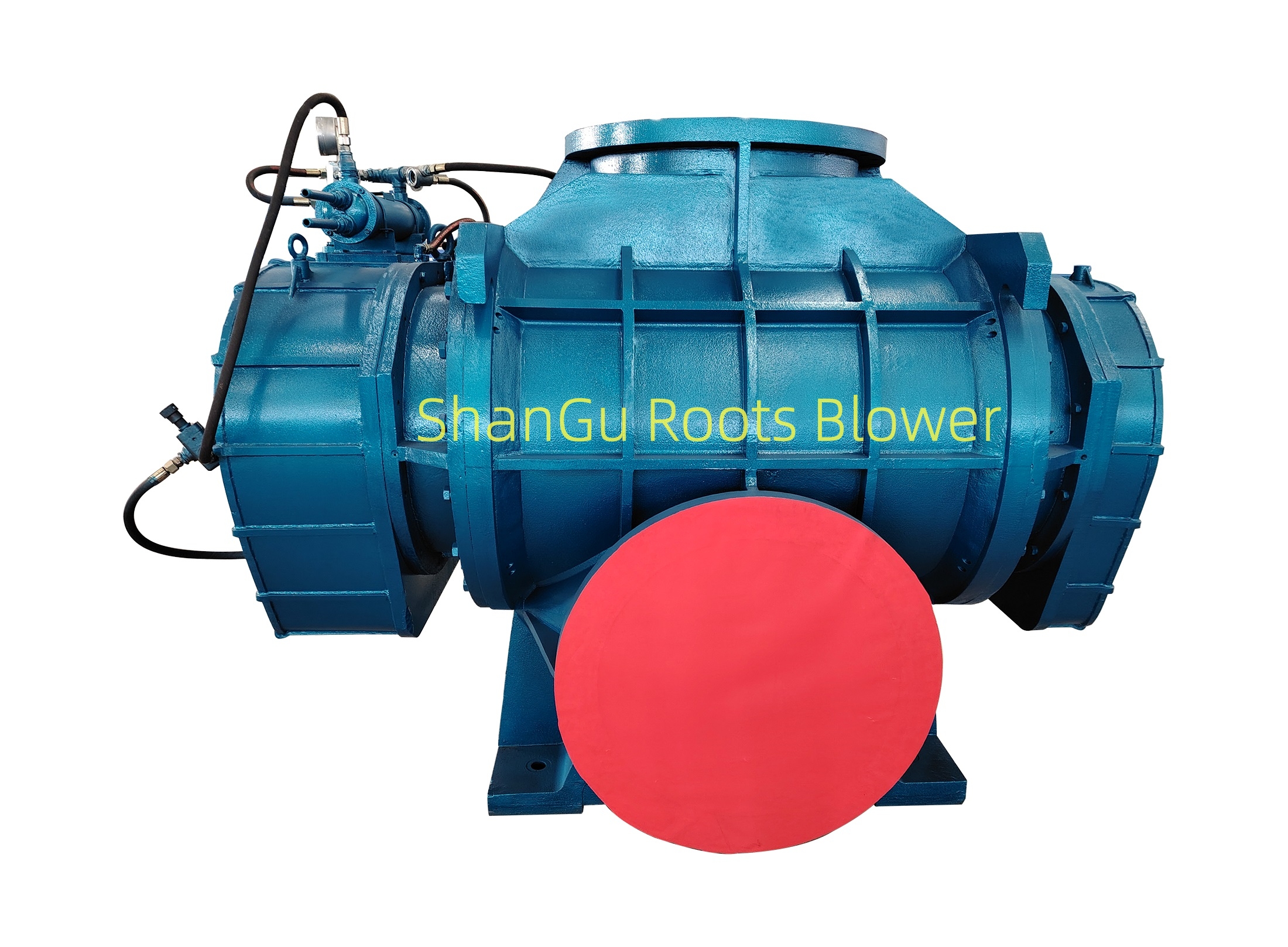
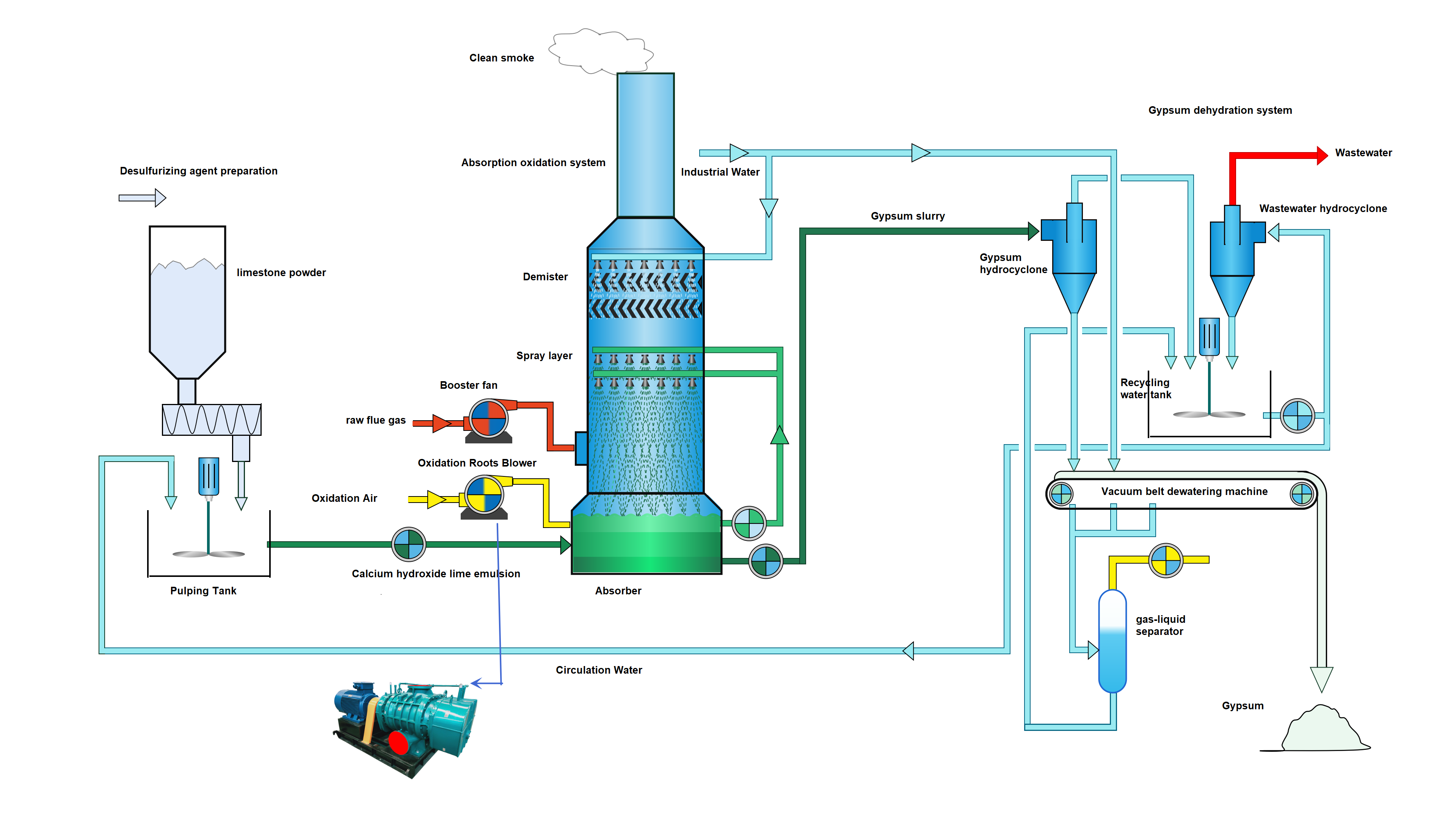
FGD Roots Blower in desulfurization processes is to provide sufficient oxidizing air to the absorber slurry pool, forcibly oxidizing calcium sulfite (CaSO₃) into stable gypsum (CaSO₄·2H₂O), thereby ensuring desulfurization efficiency and by-product quality.
I. Key Functions Analysis
Completing Chemical Conversion: In wet desulfurization, sulfur dioxide (SO₂) in the flue gas is absorbed by limestone slurry to form unstable calcium sulfite. If not oxidized in time, it will not only reduce desulfurization efficiency but also easily cause scaling inside the equipment. The oxidation Roots blower blows in air, providing oxygen (O₂), which promotes the complete oxidation of calcium sulfite into calcium sulfate, ultimately crystallizing into commercial-grade gypsum.
Improving System Operational Stability: FGD Roots blower has constant flow characteristics, maintaining a stable airflow output even with system pressure fluctuations, ensuring continuous and efficient oxidation reactions. This stability is crucial for maintaining desulfurization efficiency.
Optimizing By-product Quality: Sufficient oxidation can reduce the calcium sulfite content in gypsum to below 3%, preventing excessive impurities from affecting its resource utilization in building materials and other fields.
II. Equipment Selection and Process Adaptation Advantages:
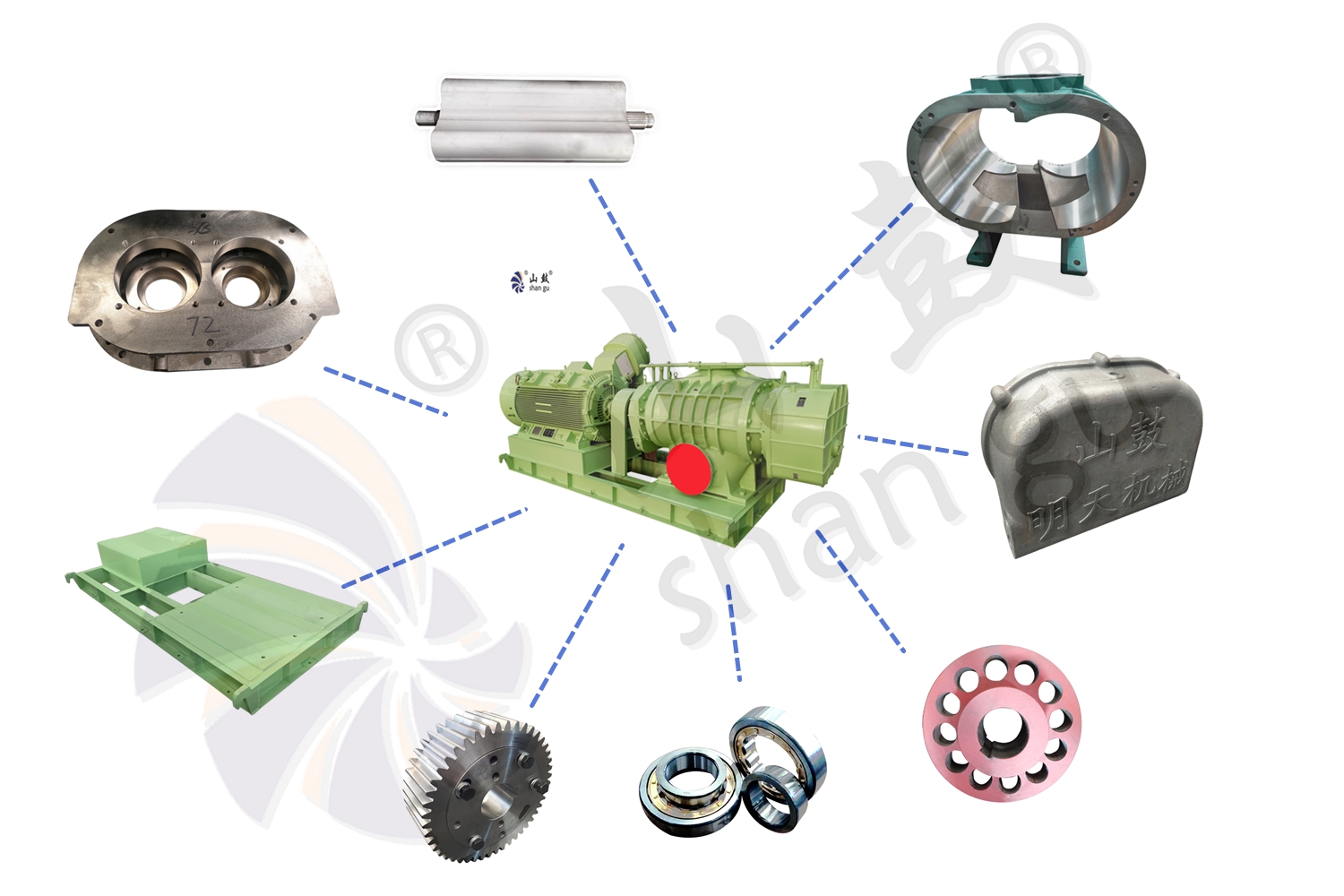
Compact Structure and Easy Maintenance: Adopting an oil-free design avoids lubricating oil contamination of the slurry. Its simple structure and reliable operation make it suitable for long-term continuous operation.
Strong Corrosion Resistance: For the high humidity and corrosive characteristics of the desulfurization environment, the blower is often made of special materials or undergoes anti-corrosion treatment to extend its service life.
Supports Variable Frequency Control: Equipped with a variable frequency control system, the air volume can be dynamically adjusted according to the actual load, achieving energy-saving operation while ensuring oxidation effect.
While How does FGD Roots blower play its role in Flue Gas Desulfurization (FGD) system? Now the following details are coming.
Specification of Shangu FGD Roots Blower
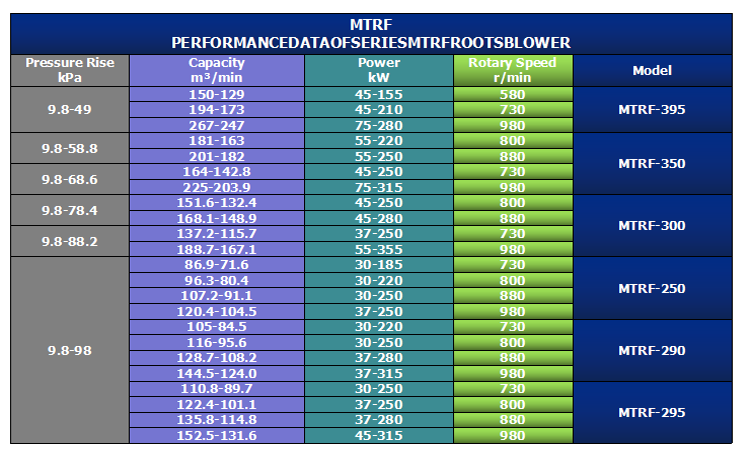
1.All models of FGD roots blower
MTRF-245 MTRF-250 MTRF-290 MTRF-295 MTRF-300 MTRF-350 MTRF-395 MTRF-400 MTRF-450
2.Méid an scaoilte tolladh
245(9.85″) 、250(9.85″)、290(11.8″)、295(11.8″)、300(11.8″)、350(13.8″)、395(15.7″) 400(15.7″) 、450(18″)
Nó i raon tásc an chustaiméara
3.Scóip brú difreálach
9.8-9ish
4.Scóip cumais aeir
71.6—267 m3/mí Miannach
5.Cumhacht an mhótair
30—355kW
Gabhálais chaighdeánacha riachtanacha(comhchineál)
Píopa Ceangail Urscaoilte;entrance&exiting silencer(le scagaire aeir);flexible connector; Seiceáil an chomhla; bolg bunbhunaithe; deflating valve;brú -thomhsaire; base;giara
Gabhálais chaighdeánacha riachtanacha(Cineál plating nicil)
entrance&exiting metal bellows; bolg bunbhunaithe; base
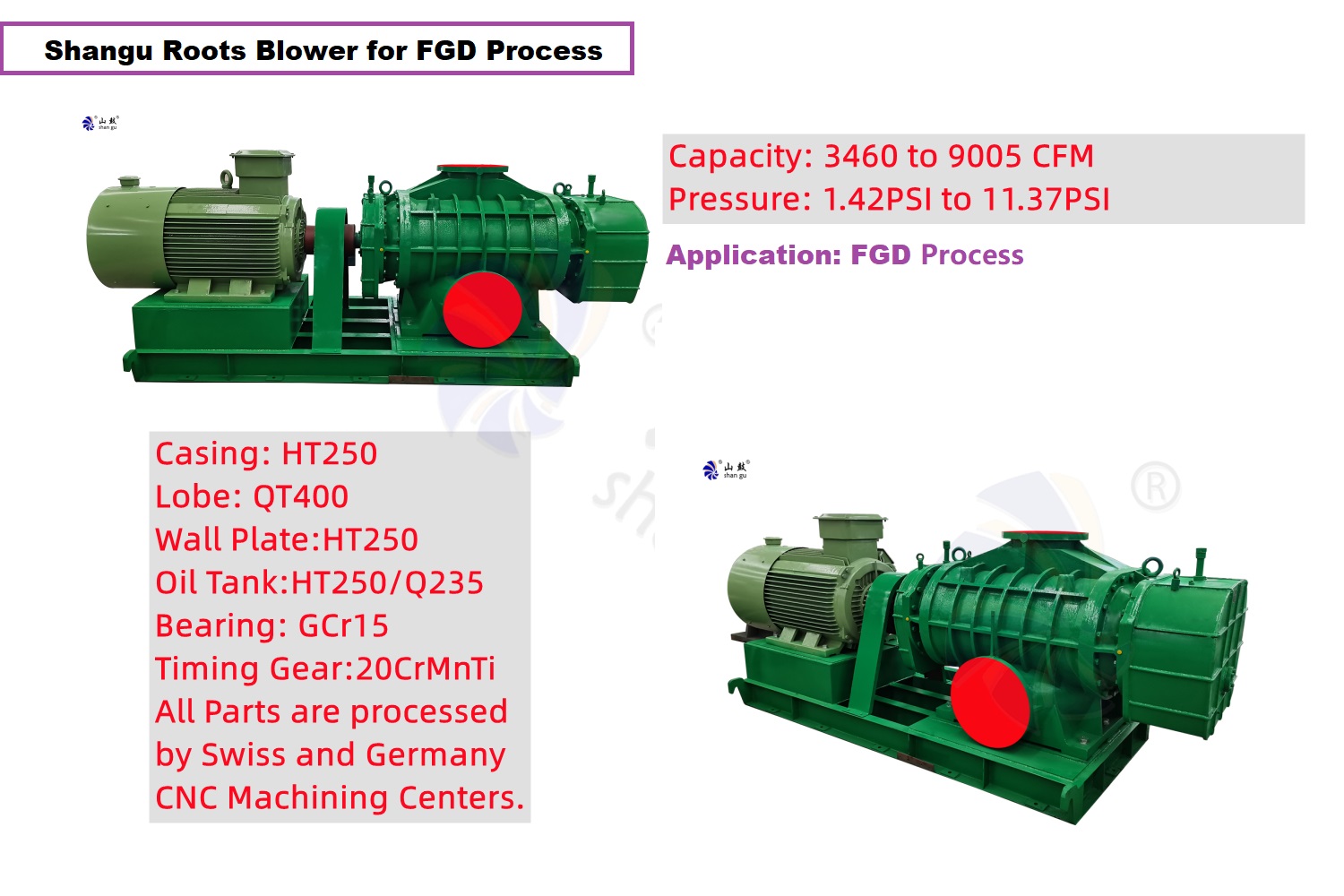
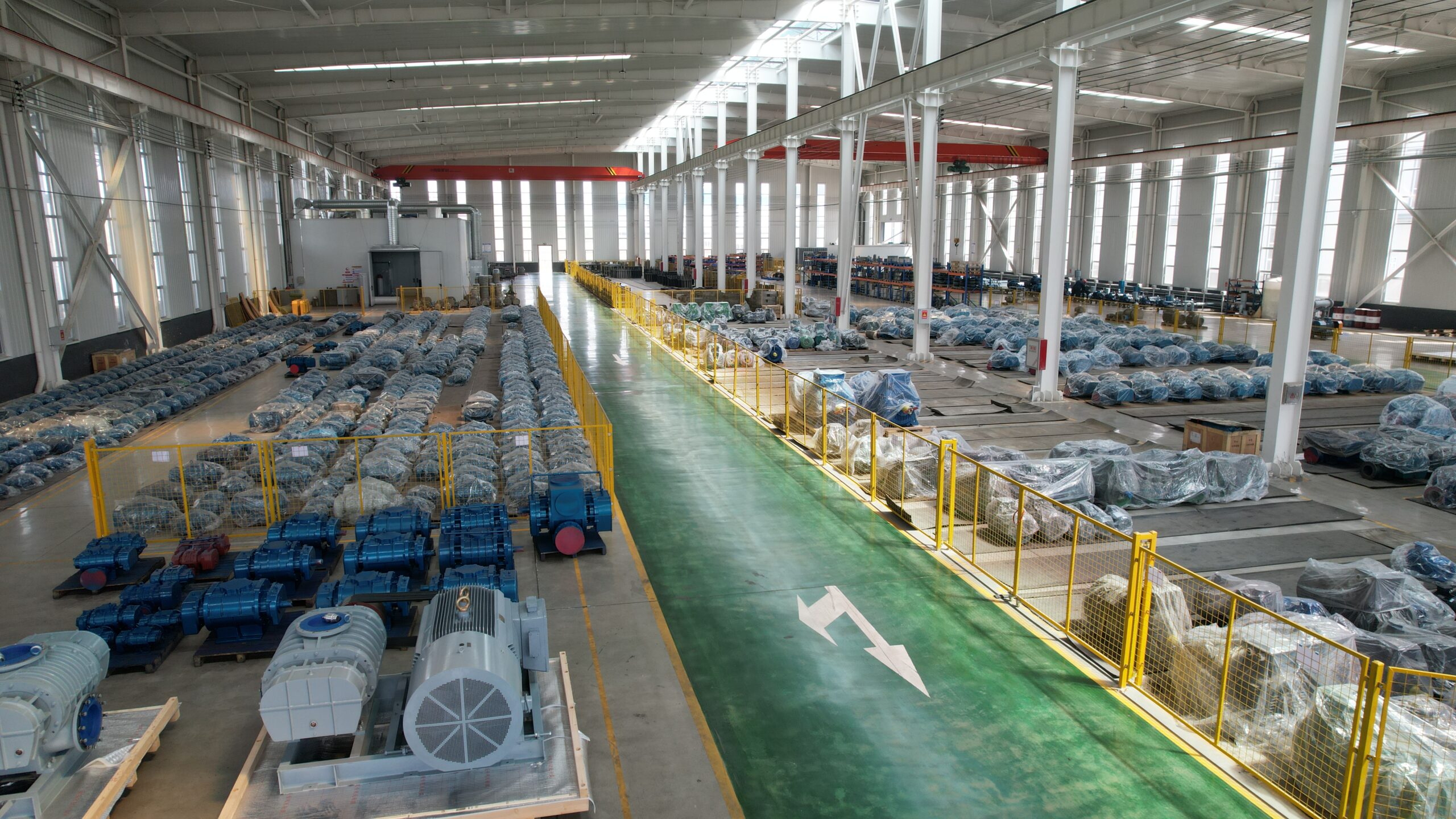
FGD Roots Blower Project Site
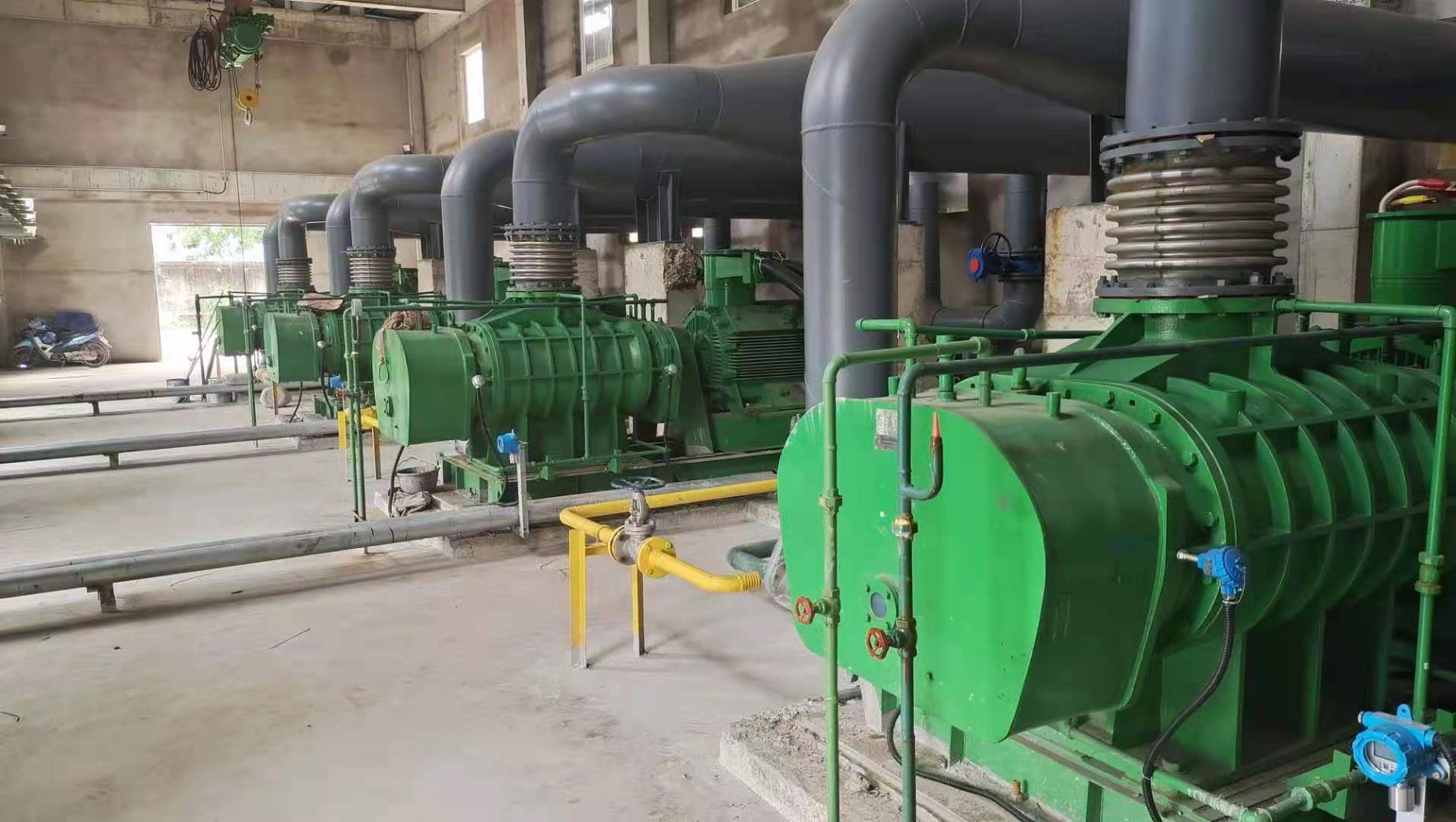
FGD Roots Blower in desulfurization processes is to provide sufficient oxidizing air to the absorber slurry pool, forcibly oxidizing calcium sulfite (CaSO₃) into stable gypsum (CaSO₄·2H₂O), thereby ensuring desulfurization efficiency and by-product quality.
I. Key Functions Analysis
Completing Chemical Conversion: In wet desulfurization, sulfur dioxide (SO₂) in the flue gas is absorbed by limestone slurry to form unstable calcium sulfite. If not oxidized in time, it will not only reduce desulfurization efficiency but also easily cause scaling inside the equipment. The oxidation Roots blower blows in air, providing oxygen (O₂), which promotes the complete oxidation of calcium sulfite into calcium sulfate, ultimately crystallizing into commercial-grade gypsum.
Improving System Operational Stability: FGD Roots blower has constant flow characteristics, maintaining a stable airflow output even with system pressure fluctuations, ensuring continuous and efficient oxidation reactions. This stability is crucial for maintaining desulfurization efficiency.
Optimizing By-product Quality: Sufficient oxidation can reduce the calcium sulfite content in gypsum to below 3%, preventing excessive impurities from affecting its resource utilization in building materials and other fields.
