
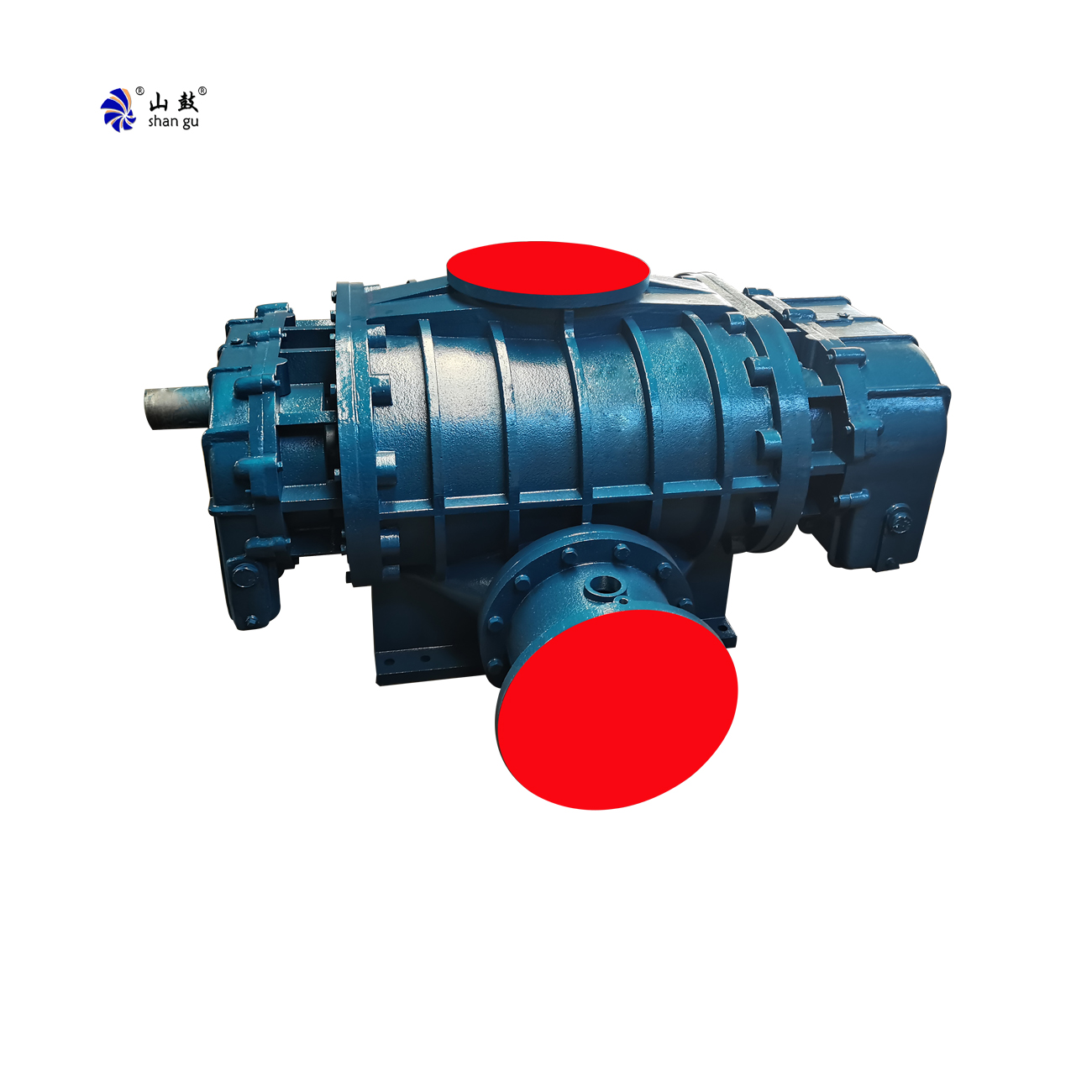
As a positive displacement blower, the air volume adjustment of Sustraiak putzgailua must combine equipment characteristics, (adib., air volume is proportional to rotational speed) eta working conditions, (adib., short-term fine-tuning or long-term stable operation). Below are common adjustment methods and precautions, sorted by practicality and popularity:
I. Core Adjustment Method: Change Motor Speed (Most Common and Efficient),
The air volume of Roots blower is directly proportional to the motor speed, (the amount of compressed air per unit time increases with higher speed). Hortaz, adjusting the speed is the most direct and energy-efficient way. The main methods include:
1. Variable Frequency Drive (VFD) (Recommended)
By using a frequency converter to change the power supply frequency of the motor, the motor speed can be adjusted steplessly, (adib., reducing from 50Hz to 30Hz, the speed decreases synchronously).
- Advantages: High adjustment precision (accurate air volume control), good energy-saving effect (avoids unnecessary energy consumption), convenient operation (adjust via PLC or touch screen);
- Aplikazioak: Suitable for scenarios requiring frequent air volume adjustments, (adib., hondakin-uren tratamenduaren aireztapena, chemical process gas transmission).
2. Hydraulic Coupler Speed Regulation
Through a hydraulic coupler (composed of a pump wheel, turbine, and rotating housing) to transmit power, the thickness of the liquid ring in the working chamber is changed to achieve stepless adjustment of the output shaft speed.
- Advantages: Strong overload protection (hydraulic transmission buffers shocks), funtzionamendu egonkorra;
- Disadvantages: High cost, complex maintenance, suitable for high-power blowers, (adib., zentrala, cement plant Roots blowers).
II. Replace Hardware Components (Long-Term Stable Adjustment),
If you need to maintain a large or specific air volume for a long time, you can adjust by replacing blower hardware, mainly including:
1. Replace Pulley
The size of the pulley determines the transmission ratio, (the ratio of motor speed to blower impeller speed). Replacing a larger pulley (adib., changing from 100mm to 120mm) can increase the impeller speed and thus increase the air volume; conversely, it reduces the air volume.
- Nota: Requires shutdown operation, and the pulley sizes of the motor and blower must be matched (to avoid belt slippage or overload).
2. Replace Impeller
The impeller diameter directly affects the air volume (larger diameter means more compressed air per unit time). Replacing a larger-diameter impeller (adib., changing from 200mm to 250mm) can significantly increase the air volume; if you need to reduce the air volume, replace it with a smaller-diameter impeller.
- Nota: Requires shutdown and disassembly of the blower head, complex operation, and ensure the gap between the impeller and casing meets requirements (to avoid friction or leakage).
III. Valve Adjustment (Short-Term Fine-Tuning, Pay Attention to Limitations),
Indirectly affect the air volume by adjusting the kanalizazio erresistentzia through valve opening. The main methods include:
1. Bypass Valve Adjustment (Common)
Install a bypass pipeline with a bypass valve between the outlet and inlet of sustrai suflatzailea. When the bypass valve is opened, part of the gas flows back from the outlet to the inlet, reducing the actual air volume delivered to the system; adjust the bypass valve opening (adib., from fully open to half open) to control the reflux volume and achieve flexible air volume adjustment.
- Advantages: Simple operation (manual or automatic), flexible adjustment;
- Disadvantages: Large energy loss (reflux gas needs to be recompressed), not suitable for long-term low-air-volume operation, (will lead to decreased blower efficiency and increased temperature).
2. Inlet/Outlet Valve Adjustment (Use with Caution)
- Inlet Valve: Opening the inlet valve can increase the intake air volume and thus increase the air volume; closing the inlet valve reduces the air volume (but note: closing too much will cause excessive negative pressure, which may damage seals).
- Outlet Valve: Strictly prohibit closing the outlet valve to adjust the air volume, (Roots blower is a positive displacement blower; closing the outlet valve will cause a sudden increase in pipeline resistance, leading to overpressure operation, which may damage the motor or casing).
IV. Other Methods (Auxiliary or Special Scenarios),
1. Change Inlet/Outlet Pipeline Size
Ahal bada, replace the inlet/outlet pipelines with larger diameters (adib., changing from DN100 to DN150) to reduce pipeline resistance and increase the air volume.
- Nota: Consider pipeline cost, installation difficulty, and system layout (adib., pipeline direction, support structure); generally not recommended as a routine adjustment method.
Precautions (Key Safety Tips),
- Prohibit closing the outlet valve to adjust the air volume: The air volume of Roots blower is proportional to the speed and independent of pipeline resistance. Closing the outlet valve will cause overpressure, (the pressure in the pipeline far exceeds the rated pressure of the blower), which may damage the motor, casing, or seals.
- Monitor operating status during adjustment: Regardless of the adjustment method, monitor the blower’s korronte, tenperatura, vibration, etab., in real time (adib., current must not exceed the rated value, bearing temperature must not exceed 95°C) to avoid overload operation.
- Avoid frequent adjustments: Frequent adjustments (adib., switching valves multiple times per minute) will accelerate wear of blower components (adib., belts, errodamenduak) and shorten their service life.
- Professional operation: When replacing pulleys, bultzagailuak, and other hardware, it must be done by professionals, (to avoid equipment damage due to improper installation).
| Adjustment Method | Applicable Scenarios | Advantages | Disadvantages |
| Variable Frequency Drive | Frequent, precise air volume adjustments | Energy-saving, high precision, convenient | High initial investment |
| Replace Pulley | Short-term air volume adjustment (adib., temporary production increase) | Simple operation | Requires shutdown, limited adjustment range |
| Replace Impeller | Long-term stable large air volume | Significant effect, long-term effectiveness | Complex operation, high cost |
| Bypass Valve Adjustment | Short-term fine-tuning | Flexible, convenient | Large energy loss, low efficiency |
