
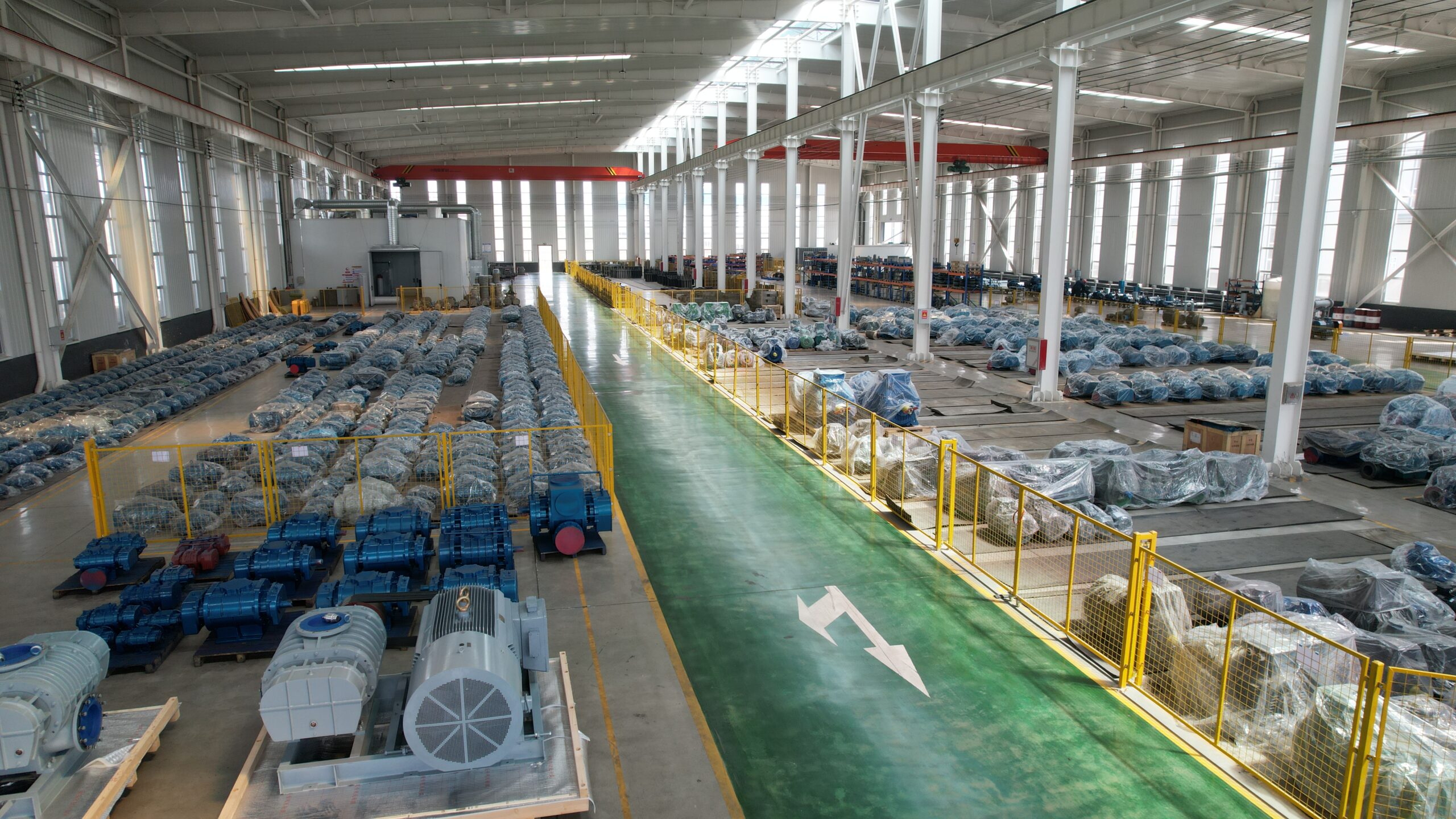


Meganiese dampherkompressie (MVR) tegnologie, sy kerntoerusting Meganiese dampherkompressie Stoomkompressor met sy voortreflike energiedoeltreffendheid, ligte verdampingstoestande, en sterk ondersteuning vir “nul ontslag” van industriële afvalwater, is besig om die voorkeur-verdampingsoplossing vir nywerhede soos voedsel te word, farmaseutiese produkte, chemikalieë, litium batterye, en steenkoolchemikalieë.
Hierdie artikel sal die kernvoordele volledig ontleed, toepaslike scenario's, en werkbeginsels van Meganiese dampherkompressie Stoomkompressor-MVR-tegnologie om jou te help bepaal of dit by jou produksiebehoeftes pas.
Wat is MVR-tegnologie?
MVR (Meganiese dampherkompressie) is 'n hoogs doeltreffende verdampingsproses wat die hitte-energie van sekondêre stoom deur 'n kompressor herwin en benut. Die stelsel druk en verhit die lae temperatuur, laedruk sekondêre stoom wat tydens verdamping gegenereer word, stuur dit dan terug na die verdamper as 'n hittebron, die bereiking van 'n geslote-lus energiesiklus.
Anders as tradisionele multi-effek verdampers wat staatmaak op eksterne vars stoom, MVR-stelsels benodig net elektrisiteit om die kompressor aan te dryf om die hele verdampingsproses te voltooi, energieverbruik aansienlik verminder.
MVR Kern Tegnologie: Werksbeginsel van 'n Roots MVR-stoomkompressor
Die kern van 'n MVR-stelsel is 'n stoomkompressor. Wortelkompressors word wyd gebruik in lae tot medium drukverskiltoestande as gevolg van hul eenvoudige struktuur, stabiele operasie, en gerieflike instandhouding.

Hoe werk a Meganiese dampherkompressie (MVR)) Kompressor werk?
Dit neem 'n dubbel-rotor parallelle struktuur aan, met twee waaiers wat deur sinchrone ratte aangedryf word, draai in teenoorgestelde rigtings teen dieselfde spoed.
'n Klein gaping (gewoonlik verseël deur spuitwater) word tussen die stuwer en die omhulsel en muurplate gelaat om metaal-tot-metaal kontak te vermy.
Die inlaat- en uitlaatpoorte is nie direk verbind nie, die vorming van 'n geslote “basiese volume.”
Wanneer die basiese volume na die uitlaatpoort draai, die hoëdrukstoom vloei dadelik terug om die druk gelyk te maak, die bereiking van positiewe verplasingskompressie.
'n Aanvanklike drukdifferensiaalomgewing moet deur die MVR-stelsel voorsien word; eenmaal gevestig, werking is uiters stabiel en betroubaar.
Let wel: Benewens Roots MVR Steam kompressors, sentrifugale kompressors word ook algemeen gebruik in hoë-vloei, hoëdrukverhoudingscenario's; die toepaslike tipe kan gekies word op grond van projekvereistes.
Meganiese dampherkompressie (MVR) Konfigurasie
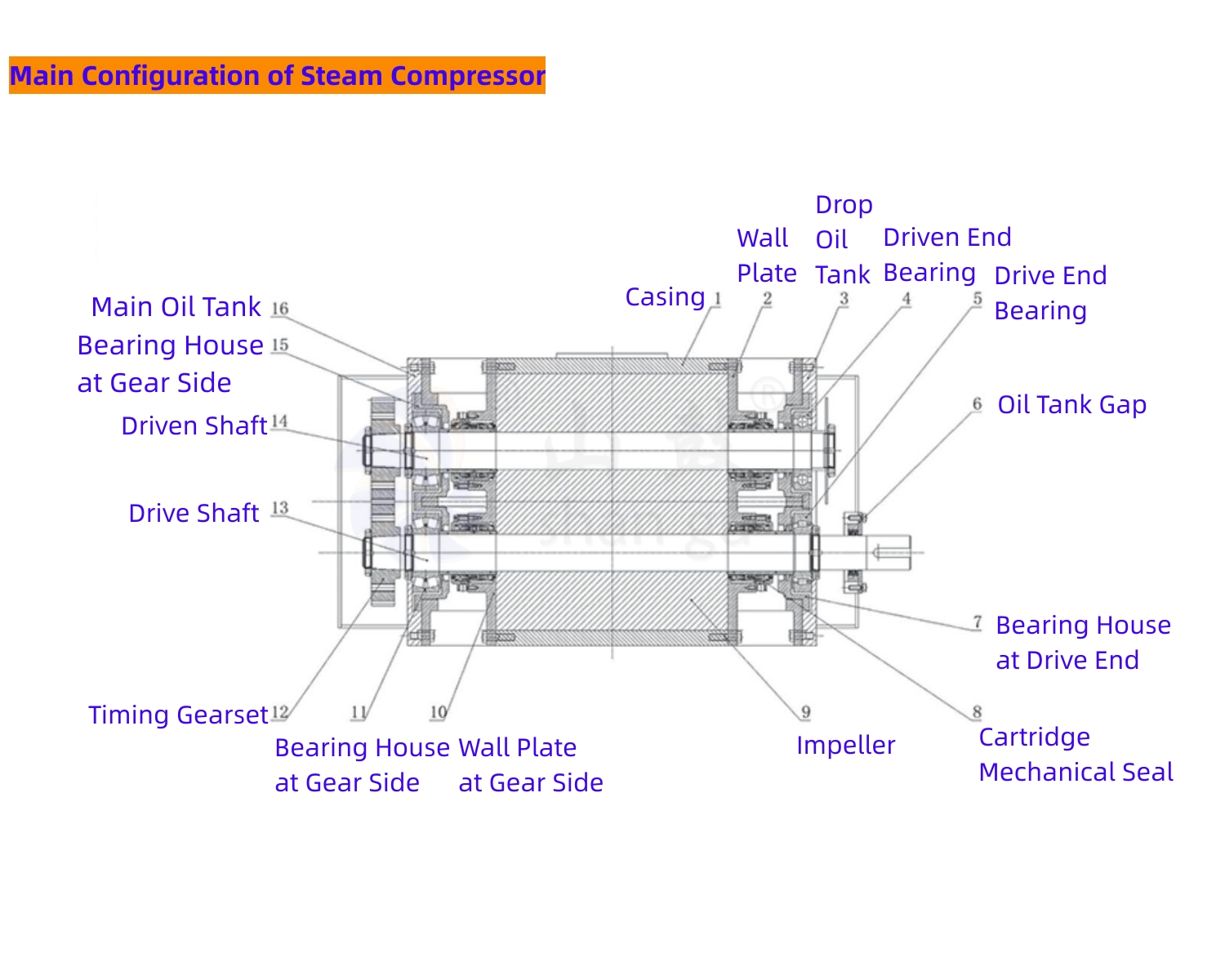
Meganiese dampherkompressie (MVR) Spesifikasie:
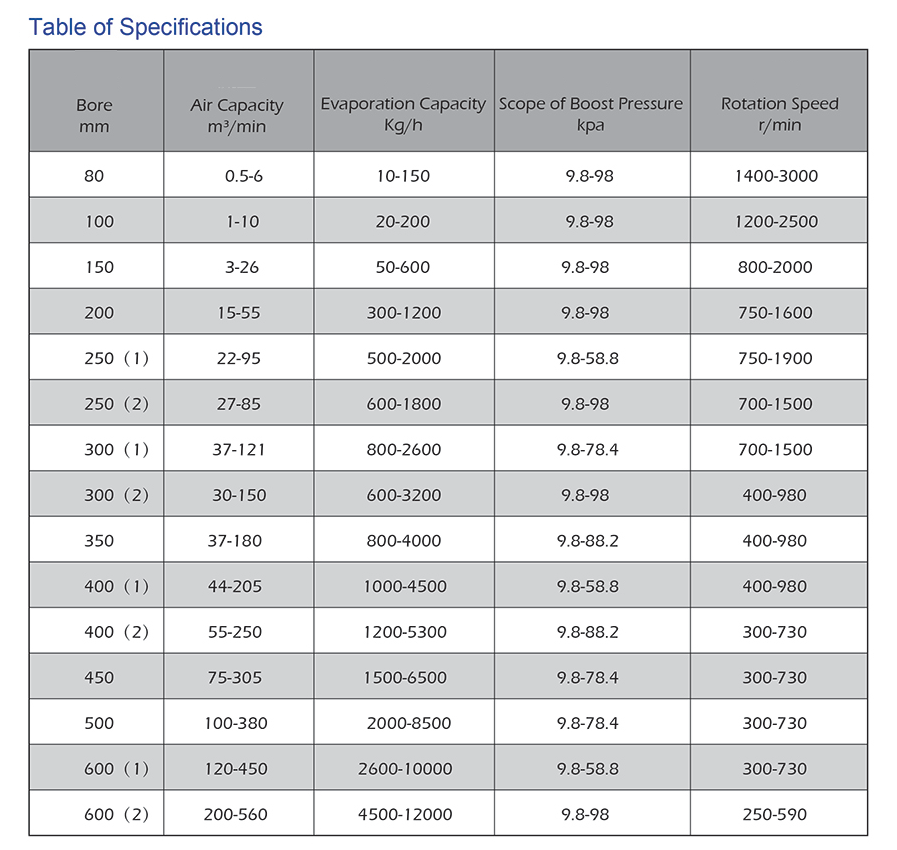
Opmerking:
- Die vloeitempo-berekeninge in die tabel is gebaseer op 'n drukverhoging van 58.8 kPa en 'n kompressor inlaat stoom temperatuur van 85°C. Die verdampingstempo word ook met behulp van hierdie parameters bereken.
- Die verdampingstempo en ander parameters in die tabel is slegs vir verwysing. Vir spesifieke parameters, kontak asseblief ons verkoopsverteenwoordiger om navraag te doen oor meer gedetailleerde kompressorspesifikasies.
Tipiese toepassingscenario's van meganiese dampherkompressie(MVR) Tegnologie
| Nywerheid | Aansoekrigting |
| Kos & Drank | Wei konsentrasie, Vrugtesap konsentrasie, Stroop Verdamping |
| Biofarmaseutiese middels | Antibiotiese konsentrasie, Tradisionele Chinese medisyne uittreksels, Aminosuur suiwering |
| Chemikalieë/litiumbattery | Litiumhidroksied/litiumkarbonaat Moederdrankherwinning, NMP Oplosmiddel Regenerasie |
| Omgewingsingenieurswese | Nul ontlading (ZLD) van hoë-sout-afvalwater, Behandeling van stortingsterrein logwater |
| Steenkoolchemikalieë | Ontzwaveling Afvalwater, Vergassing As Water Konsentrasie en Kristallisasie |

MVR – Die hoë-doeltreffende verdampingsenjin vir die groen vervaardigingsera
MVR (Megavapor herkompressie) tegnologie is nie net 'n kragtige instrument vir energiebesparing en emissievermindering nie, maar ook 'n sleutelondersteuning vir ondernemings om volhoubare ontwikkeling te bereik, voldoenende operasie, en herwinning van hulpbronne. Met die optimalisering van elektrisiteitskoste en die bevordering van toerustinglokalisering, die ekonomiese drempel vir MVR neem steeds af, en die toepassingsvooruitsigte word al hoe wyer.
As jy op soek is na lae-energieverbruik, min onderhoud, en hoogs geoutomatiseerde oplossings vir verdamping of afvalwaterbehandeling, MVR-tegnologie is die moeite werd om in-diepte te evalueer.
Hoe werk 'n Roots-stoomkompressor(Meganiese dampherkompressie(MVR)) werk?
Dit neem 'n dubbel-rotor parallelle struktuur aan, met twee waaiers wat deur sinchrone ratte aangedryf word, draai in teenoorgestelde rigtings teen dieselfde spoed.
'n Klein gaping (gewoonlik verseël deur spuitwater) word tussen die stuwer en die omhulsel en muurplate gelaat om metaal-tot-metaal kontak te vermy.
Die inlaat- en uitlaatpoorte is nie direk verbind nie, die vorming van 'n geslote “basiese volume.”
Wanneer die basiese volume na die uitlaatpoort draai, die hoëdrukstoom vloei dadelik terug om die druk gelyk te maak, die bereiking van positiewe verplasingskompressie.
'n Aanvanklike drukdifferensiaalomgewing moet deur die MVR-stelsel voorsien word; eenmaal gevestig, werking is uiters stabiel en betroubaar.
Let wel: Benewens Roots MVR Steam kompressors, sentrifugale kompressors word ook algemeen gebruik in hoë-vloei, hoëdrukverhoudingscenario's; die toepaslike tipe kan gekies word op grond van projekvereistes.
