
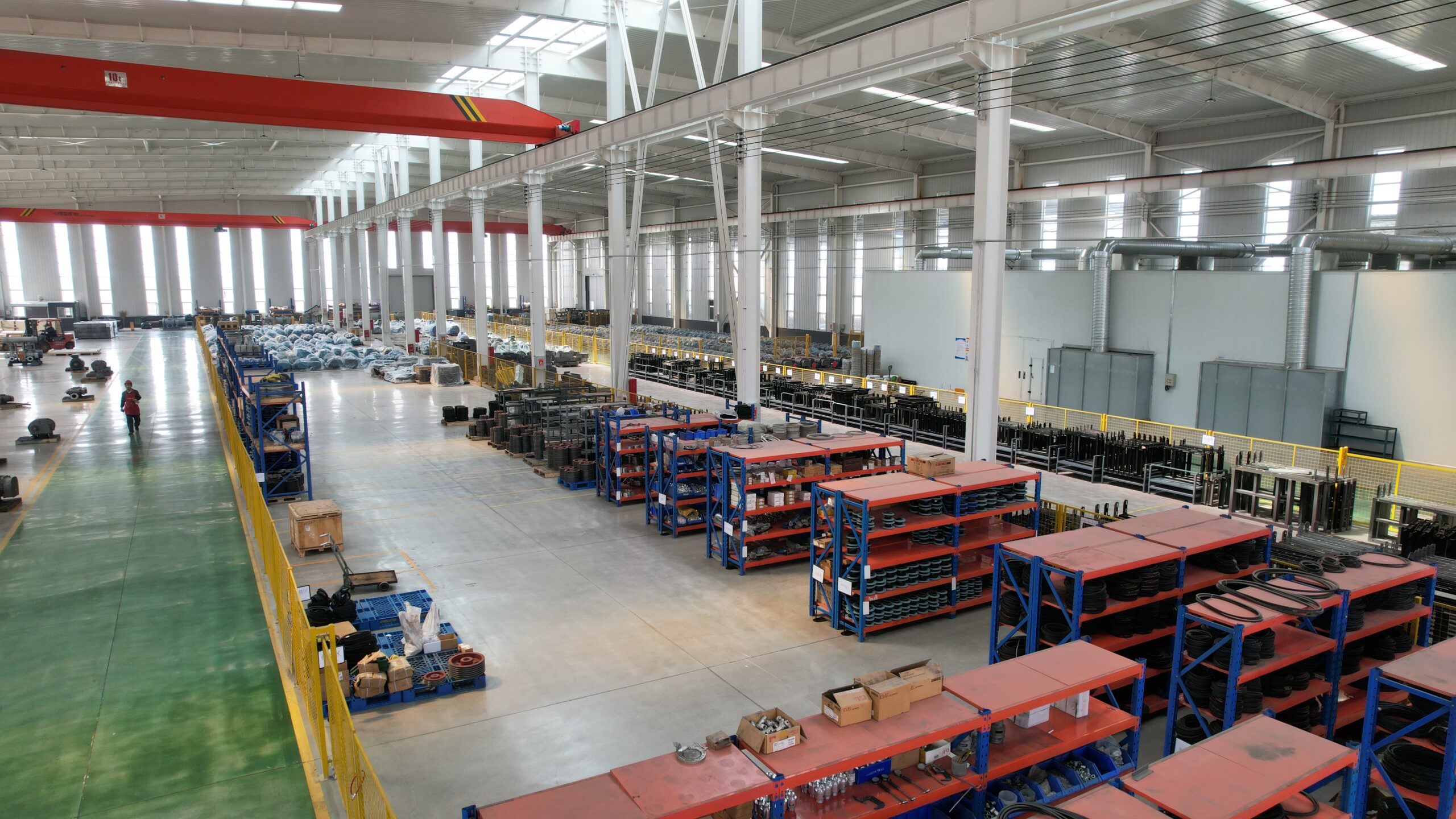
Roots Blower Maintenance Guide: Proactive Service Schedule to Maximize Uptime & Lifespan
Whether you run a wastewater treatment plant, a pneumatic conveying line, or a vacuum system, jou Wortelsblaser, (also called a Positiewe verplasingsblaser, of roots compressor in many layouts) only delivers reliable airflow when lubrication and intake cleanliness are disciplined. This guide translates shop-floor reality into a clear, repeatable service roots blower routine — with the exact oil grades, viscosity windows, and inspection intervals technicians actually use.
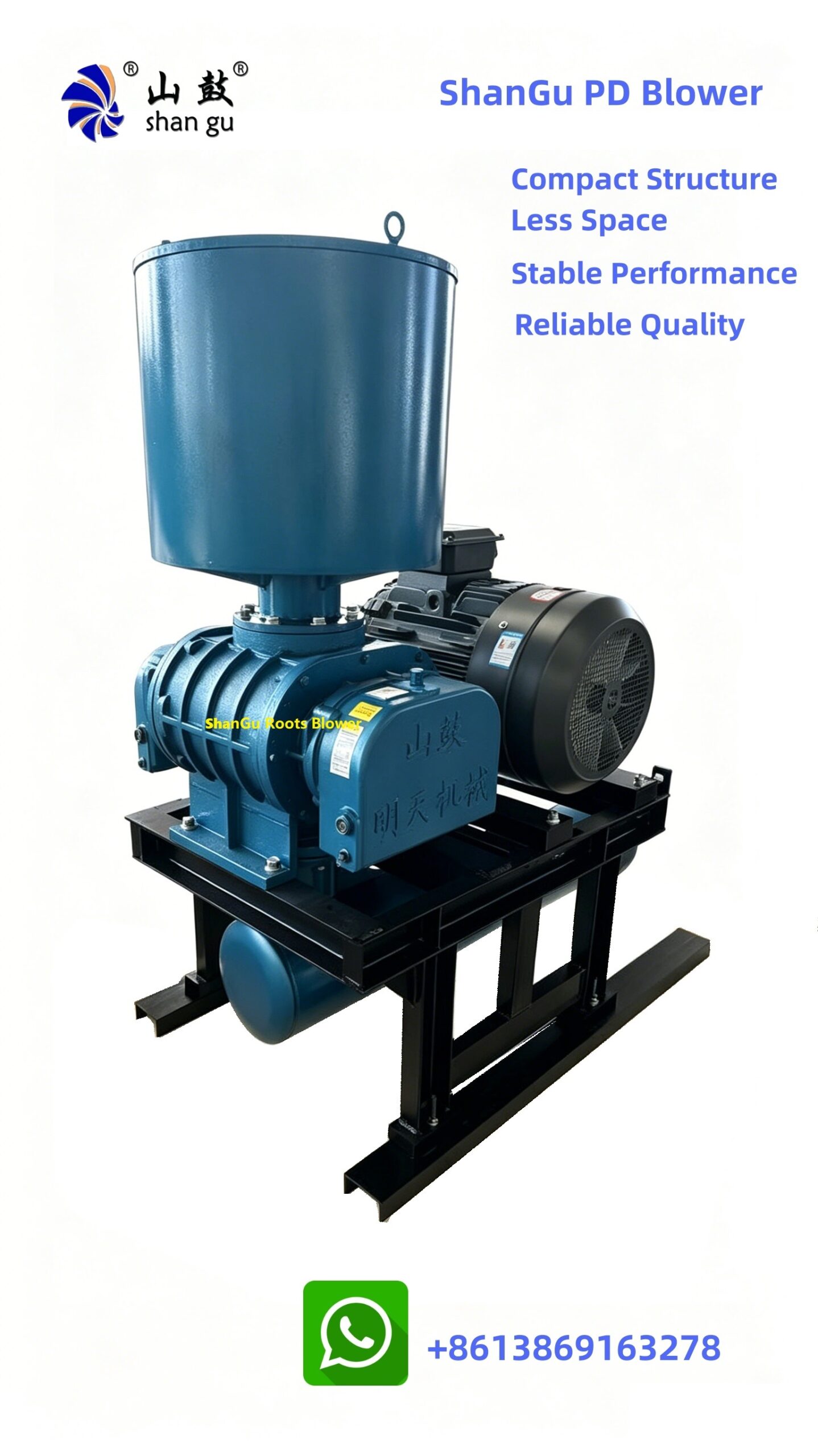
为什么严格的维护计划对容积式鼓风机至关重要
A Positiewe verplasingsblaser, moves a near-constant volume of air per revolution. That’s great for stable flow — but it also means the rotors, timing gears, and bearings work inside very tight internal clearances. Any abrasive dust that sneaks past the inlet, or any oil that loses film strength, shows up fast as:
- Rising bearing / gearbox temperature
- Increased power draw (motor current creep)
- Abnormal pulsation or “metallic” geraas
- Premature seal weeping and rotor scoring
The cheapest insurance policy you have is a written, logged service roots blower checklist — not guesswork.
Quick Daily Checks (Do These Every Shift)
| Check Item | What to look for | Action |
| Gearbox oil level | Sight-glass level at the center / mid-line when the unit is OFF & depressurized | Top up immediately if below normal level —but never overfill |
| Abnormal noise / vibrasie | Knocking, grinding, or a sudden change in “sound signature” | Stop & investigate — don’t nurse a sick machine
|
| Omhulsel / bearing zone temp | Touch-safe IR check or fixed sensor; note trend vs. yesterday | Investigate if trend climbs >5–8 °C without process change |
| Visible oil / air leaks | Wet streaks at seals, mist around breather, loose joint lines | Tighten to spec; plan seal kit if weeping persists |
Inlaatdemper / Intake Filter — Clean or Replace Every 7–15 Days
Your Wortelsblaser inhales through an inlet silencer/muffler that contains a filter element. Once that element loads up with dust, the restriction does three bad things at once:
- Starves airflow → process pressure drops or the blower works harder to compensate
- Raises inlet vacuum → increases mechanical strain
- Invites dust past the media → abrasive wear inside the rotor chamber (the expensive kind of damage)
Recommended routine:
| Condition | Interval | Action |
|---|---|---|
| Normal / indoor air, | Every 7 days — visual + ΔP check | Blow-clean reusable mesh/pre-filter; confirm media integrity |
| Dusty / outdoor / seasonal pollen or flour/starch dust, | Every 7–15 days, | Clean OR replace the filter element — whichever the element design allows |
| Element looks grey/deformed, media tears, or you see dust downstream, | Immediately | Replace — do not “make do” |
Gear Oil — The #1 High-Impact Maintenance Item
The timing gears live in an oil bath. Clean, correctly graded oil = quiet meshing, controlled heat, and long bearing life. Ignore it, and you get pitting, clearance drift, and eventual seizure.
Eerste (Break-In) Oil Change — After 30 Days / ~500 Operating Hours
New gear sets shed fine wear particles during the first month of running. That “break-in load” ends up suspended in the oil.
- Drain completely while warm (nie skroei nie)
- Flush only if the manufacturer specifically calls for a flush medium
- Refill with fresh CKC-N220 to the correct sight-glass level
- Record the date, hour meter reading, and oil batch/lot in your logbook
- Think of this 30-day first change as cheap insurance that pays for itself by preventing early gear wear.
Routine Oil Change Interval — Every 1–3 Months (Depending on Runtime & Conditions)
After the first change, set a rolling window:
| Operating Profile | Suggested Max Interval |
|---|---|
| Continuous 24/7, hot/humid/dusty | Every 1 month, (or ~750–1,000 h) |
| 2–3 shift operation, decent ventilation | Every 2 maande, |
| Intermittent duty, clean environment | Up to 3 maande, (but inspect condition monthly) |
Change sooner if you see:
- Oil turned dark-black, milky (water ingress), or smells “burnt”
- Metal sheen / fines on the drain plug magnet
- Viscosity clearly thinner or thicker than fresh reference
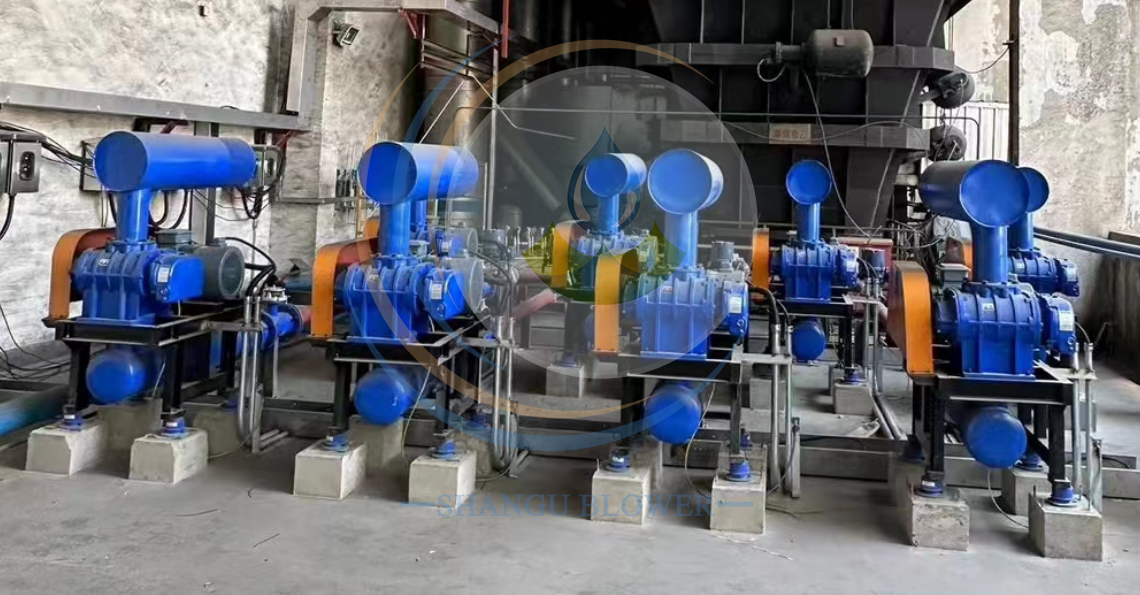
Positiewe verplasingsblaser
Correct Gear Oil Specification (CKC-N220 / CKC-N320)
| Property | Required Value |
|---|---|
| Grade (standard), | CKC-N220 — ISO VG 220 medium-load industrial gear oil, (L-CKC 220) |
| Kinematic viscosity @ 40 °C | 198–242 mm²/s, |
| Flash point (open cup) | ≥ 200 °C, |
| Summer / high ambient option, | Step up to CKC-N320, (ISO VG 320) when sustained high temperature demands higher film strength |
| Fill level | Mid-line of the sight glass with the unit stopped and level |
Monthly / Quarterly Service Roots Blower Checklist
This is the “steady-state” PM layer that keeps small issues from becoming outages:
- Re-check silencer mounting & gasket seal — suction leaks kill efficiency silently
- Belt tension / coupling visual, (if belt-driven) — glazed faces & hairline cracks mean “replace soon”
- Torque check on main bearing-housing bolts & foundation anchors — vibration loosens what you last torqued
- Breather / dip-tube cap — clean the breather element so the gearbox can vent without drawing dust
- Hour-meter log — tracking actual running hours is far more honest than “calendar months alone”
Signs Your Roots Vacuum Blower or Air Blower Needs Professional Servicing
A roots vacuum blower application adds one extra red flag: if the inlet sees condensed moisture or process vapor, the gearbox side must stay positively sealed — otherwise oil degrades fast and shaft seals weep.
Call for a professional service roots blower overhaul / inspection when you see:
- Persistent rising amp draw despite a clean filter
- Hot bearing zone that climbs even after an oil change
- Rotor rub noise, (loss of internal clearance)
- Seal leakage that returns within days of topping up
- Vibration trend spiking on a portable analyzer
FAQ — Roots Blower / Positive Displacement Blower Maintenance
V: How often should I clean the inlet filter on a roots blower?,
A: In most plants, inspect/clean every 7 days and plan a replace or deep-clean by day 15. Dustier sites should shorten the clock, not stretch it.
V: What gear oil does a CKC-N220 roots blower use?,
A: Use an ISO VG 220 medium-load industrial gear oil meeting the L-CKC specification — ν@40°C = 198–242 mm²/s, flash point ≥200°C. In hot summers, many OEMs accept stepping to CKC-N320 provided the system is reviewed.
V: Why change oil at 30 days on a new unit?,
A: The first ~500 hours (“break-in”) produce fine metallic particles and assembly residue. A first drain at ~30 days removes that debris before it circulates and pits the gear faces.
V: Can I run a roots compressor without the inlet silencer/filter for “just a test”?,
A: Nooit nie. Even a few minutes of unfiltered air can admit grit that scores rotors and shifts clearances — turning a cheap filter into a very expensive repair.
V: What’s the difference between a roots vacuum blower and a roots air blower?,
A: Meganies soortgelyk (lobed PD principle), but a roots vacuum blower is piped for suction service (often with multi-stage or isolation/condensate protection), while an air-supply Wortelsblaser pushes against discharge pressure. Maintenance discipline — especially intake cleanliness — matters in both.
Need a Customized Service Plan or Replacement Parts?
If you’re responsible for a fleet of positive displacement blowers and want:
- A tailored PM schedule matched to your duty cycle & environment
- Genuine filter elements, shaft seals, and CKC gear-oil supply
- On-site service roots blower inspection & rotor-clearance verification
👉 [Contact Our Engineering Team / Request a Quote] — tell us your model, motor kW, working pressure, and whether it’s air-supply or roots vacuum blower duty, and we’ll size the PM plan and spare parts kit to match.
