

Roots Blower Compressor Pre-Start Checklist & Safe Startup Procedure: Protect Your Equipment, Your Team, and Your Uptime
Why the First 30 Minutes Decide the Next 5 Years of Your Roots Blower Compressor’s Life
If you manage a roots blower compressor in wastewater aeration, pneumatic conveying, biogas, or vacuum applications, you already know: these machines punish bad startups.
They’re positive displacement devices. Close the discharge too fast, forget the bypass valve, or start against pressure — and internal compression spikes, rotors heat, belts overload, and motors trip. In the worst cases, you’re looking at casing distortion, seal failure, or a burned motor before the shift ends.
That’s why every professional startup follows one rule: never let a Roots blower compressor see load until you’ve proven it’s healthy at zero pressure.
Below is the field-tested Part 3 pre-operation sequence many plants document into their SOP — expanded with the engineering details that actually prevent downtime.
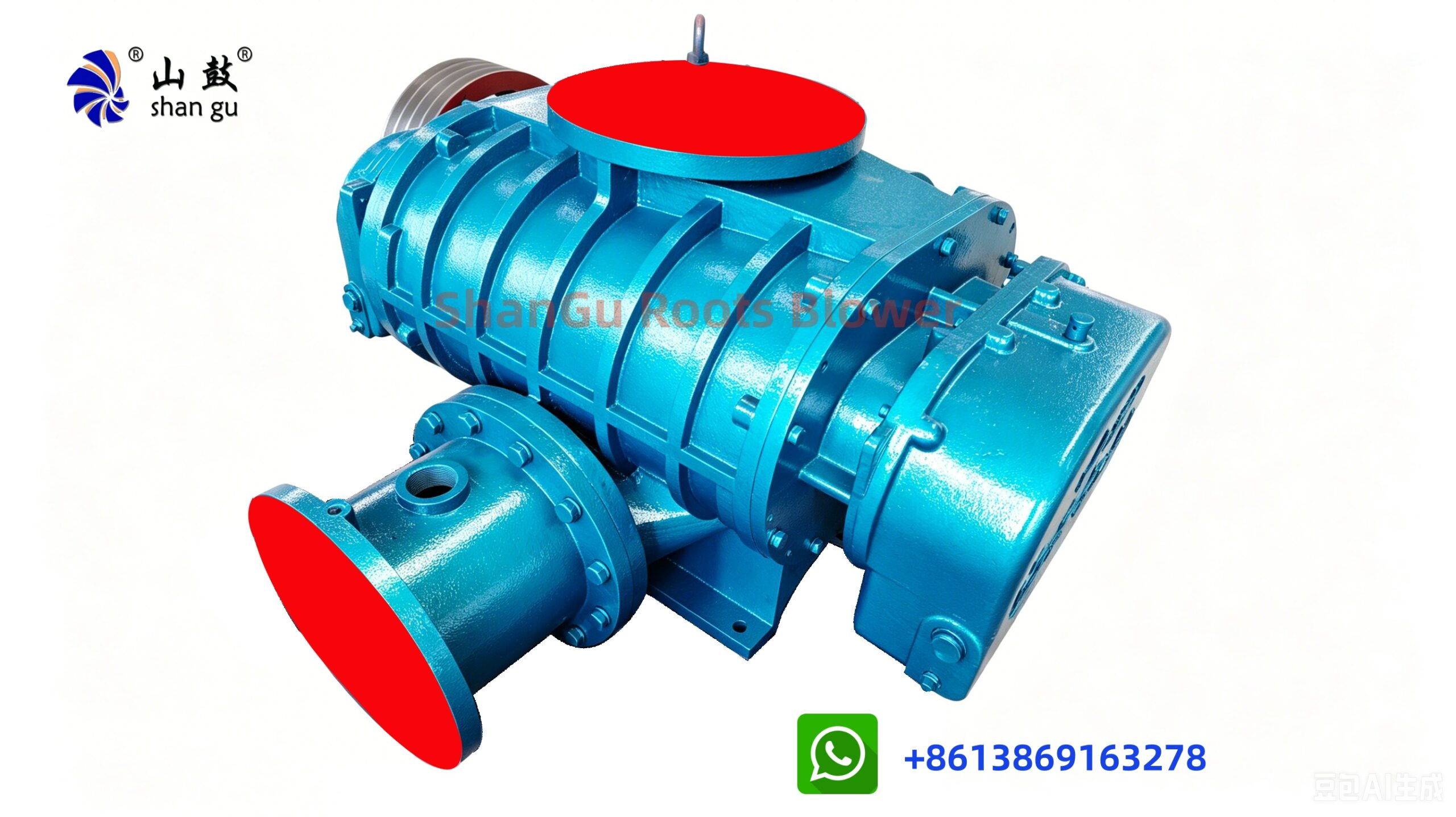
✅ Roots Blower Compressor Pre-Start Checklist (Do This Before You Press “On”)
1) Manual Turn / Mechanical Freedom Check for roots blower compressor
- Hand-rotate the pulley or coupling by ≥360° (preferably several full turns, both directions if access allows).
- Feel for:
- smooth rotation — no hard spots, no metallic scrape,
- no gritty “sand” feeling at bearings,
- no sudden lock-up.
- Why: Internal debris, bearing preload issues, or rotor contact show up here — beforeyou energize anything. If rotation feels wrong, stop and inspect. Don’t “try it anyway.”
2) Roots Blower Compressor Bypass / Relief / Blow-off Valve Must Be FULL OPEN
- Verify the bypass (blow-off / vent-to-atmosphere / discharge relief) valve is fully open before startup.
- All manual isolation valves in the immediate suction/discharge train should be in the safe starting position per your P&ID (usually: suction open, discharge routed through bypass).
⚠️ Rule of thumb: If the blower can push against a closed pipe, you’re not starting a blower — you’re building a pressure bomb. The roots blower compressor relies on your keeping the outlet path open until it’s running.
3)Roots Blower Compressor Cooling Water Before You Run (Water-Cooled Models Only)
- Open cooling water supply → confirm flow/pressure at the outlet.
- Verify no leaks at jackets, fittings, or hose tails.
- Never run a water-cooled unit dry, and never shut off cooling while the casing is still hot.
4) Roots Blower Compressor Point-Start (“Bump”) to Verify Rotation — Then Confirm Direction
- With the bypass still open (no-load):
- Do a momentary point-run (energize & immediately cut).
- Face the pulley or coupling squarely. The rotation must match the direction arrow on the belt guard / casing.
- If it spins backwards:
- Swap any two phases (or correct VFD direction logic) — do NOT try to “fix it” by closing valves.
- Reverse rotation can upset lubrication paths, timing-gear loading assumptions, and — in system layouts with check valves — create dangerous reverse-flow scenarios.
🟢 No-Load Commissioning Phase (The 30-Minute “Prove It” Window)
Once rotation is confirmed and bypass remains open:
- Start the roots blower normally.
- Let it run ≥ 20–30 minutes under genuine no-load / bypass-open conditions.
- During this window, walk the machine systematically:
| What to Watch | Green Zone | Red Flag → Stop |
| Lubrication | Oil level steady at sight glass; no foam overflow; oil return visible if gear-type | Sudden oil loss, milky emulsion, hot gearbox skin temp rising fast |
| Leaks | Zero oil seep at seals/gaskets; zero air hiss at flange joints | Active drip, spray pattern, or air leak at casing split |
| Noise / Vibration | Steady lobe-passing tone; no knocks; bearing cap vibration feels “smooth-rough,” not “sharp” | Metallic scrape, rhythmic knock, rapid amplitude climb |
| Bearings / Temps | Warm, not scalding; no localized hot spot | Bearing too hot to touch within minutes; sudden temp spike |
| Motor | Current well below rated FLA at no-load | Motor pulling unexpected amps with bypass wide open → investigate restriction or mechanical drag |
When to Involve a Roots Blower Factory (and How to Get an Accurate Quote)
Even a perfect checklist can’t fix a wrong selection:
- Your system pressure rose after a process change, but the blower is still sized for last year’s curve
- You need a roots vacuum pump system and aren’t sure whether to separate vacuum + pressure trains or combine them
- Frequent seal failures trace back to misalignment, piping loads, or a casing that isn’t quite the right metallurgy for the gas stream
This is where working directly with a roots blower factory pays for itself — not just on unit price, but on total installed cost and mean time between failures.
What we need from you to respond with a real proposal (not a guess)
[Request a Selection & Quote →] ← WhatsApp:+8613869163278
Or email us direct with the above table filled: [vincent@cnrootsblower.com]
❓ FAQ (Schema-Ready — Great for “People Also Ask” Snippets)
Q: Can I start a Roots blower with the discharge valve partially closed if I’m in a hurry?
A: No. Positive-displacement blowers generate pressure proportional to system resistance. Starting against a closed or nearly closed discharge can overpressurize the casing, overload the motor, and cause internal damage within seconds. Always start with the bypass/blow-off full open.
Q: What happens if the rotation direction is wrong?
A: Reverse rotation can disrupt expected lubrication behavior, load timing gears incorrectly, and — depending on your system’s check-valve layout — allow reverse gas flow. Always verify direction by bump-test before full run.
Q: Do I really need to run 30 minutes no-load every time?
A: After major maintenance or a first-time install: yes. For routine daily restarts on a healthy machine, your plant SOP may shorten it — but the principlestays: confirm lubrication, temperature trend, and vibration before you close the bypass.
Q: What’s the difference between a Roots blower and a roots vacuum pump?
A: Mechanically similar (lobe rotors, positive displacement), but the vacuum version is piped to evacuate a vessel or hold negative pressure upstream; the blower version delivers positive pressure downstream. Many systems use both — and packaged roots blower vacuum pump skids handle both duties in one train.
Q: Who manufactures or supplies replacement units?**
A: We’re a direct roots blower factory with in-house machining, dynamic balancing, test-run capability, and global shipping. Send your nameplate photo + duty point and we’ll confirm match or upgrade path within one working day.
