
Biogas Blower Selection: A Comprehensive Guide to Key Sizing Factors for Safe & Efficient Operation
Biogas blower is core equipment in the industrial gas conveying system. While for biogas projects—from agricultural digesters to wastewater treatment plants—biogas blower selection is critical to ensuring safe, stable gas transportation. As a core component of biogas systems, blowers must withstand the medium’s unique challenges (flammability, corrosivity, impurities) while meeting process demands.
Why Biogas Blower Selection Matters
Biogas (a mix of methane, CO₂, H₂S, and impurities) is highly flammable (methane LEL: 5%) and corrosive (H₂S attacks metals). A mismatched blower can lead to leaks, explosions, or frequent downtime—costing thousands in repairs and lost production. The right biogas blower选型 (sizing) balances safety, efficiency, and long-term reliability.
Core Factors for Biogas Blower Sizing
1. Medium Characteristics: The Foundation of Selection
The first step in biogas blower material selection and design is analyzing the gas composition:
- Component Analysis: Measure methane content (typically 50–70%), hydrogen sulfide (H₂S) concentration (≤200 ppm for mild corrosion; ≥500 ppm requires heavy-duty materials), moisture (relative humidity), and solid impurities (dust, grit, particle size <50μm).
- Corrosion Resistance: For H₂S-rich biogas, use 304/316L stainless steel or apply anti-corrosion coatings (e.g., PTFE) to impellers, casings, and shafts. Avoid carbon steel, which rusts rapidly.
- Pre-Treatment Integration: Match the blower with upstream devices (desulfurizers, dryers, filters) to remove H₂S, water, and debris. For example, a ceramic filter (50μm precision) prevents abrasive particles from damaging bearings.
2. Process Parameters: Defining Performance Specs
Accurate calculation of these metrics ensures the blower meets flow and pressure needs:
- Flow Rate: Base on actual biogas production (e.g., 100–500 m³/h for small farms) and add a 10–20% capacity margin to handle fluctuations (e.g., peak digestion hours).
- Pressure (Head): Calculate total system resistance, including pipe friction, valves, and purification units. Typical biogas transport requires 10–30 kPa (1.5–4.4 psi) of boost.
- Duty Cycle: Specify if the blower runs 24/7 (continuous duty) or intermittently. Continuous operation demands high-reliability bearings (e.g., SKF Explorer) and sealed designs.
3. Safety Compliance: Non-Negotiable for Flammable Gas
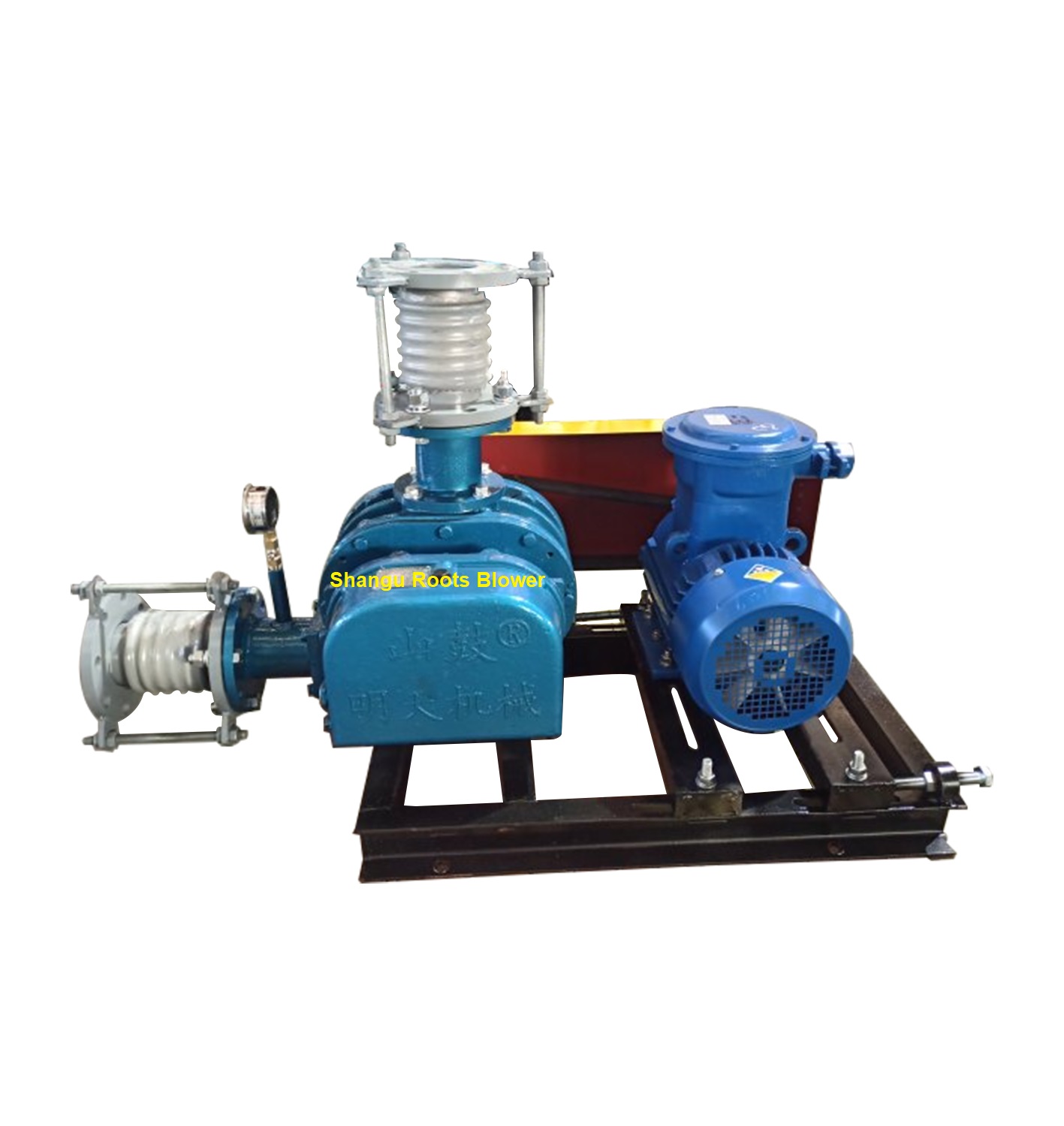
Biogas is Class I Division 1 (US) / ATEX Category 2 (EU) flammable. Explosion-proof biogas blower requirements include:
- Explosion-Proof Rating: The entire unit (motor, wiring, housing) must meet Ex d IIB T4/T6 (ATEX/IECEx) or Class I Division 1 Group D (NEC) standards. Look for certifications from agencies like UL or TÜV.
- Sealing Design: Use double mechanical seals or nitrogen-purged seals to prevent gas leakage. Install leak detectors (e.g., catalytic bead sensors) for high-risk areas, triggering auto-shutdown at 25% LEL.
- Safety Accessories: Equip with flame arrestors (at inlet), water seals (to block backfire), and pressure relief valves (at outlet).
| Safety Feature | Purpose | Example Standard |
| Explosion-Proof Motor | Prevent ignition from sparks | Ex d IIB T4 (ATEX) |
| Double Mechanical Seal | Eliminate shaft leakage | API 682 |
| Flame Arrestor | Stop deflagration from entering the blower | EN 12874 |
4. Model Matching & Site Adaptation
Choose a blower type that fits your budget, maintenance capacity, and space:
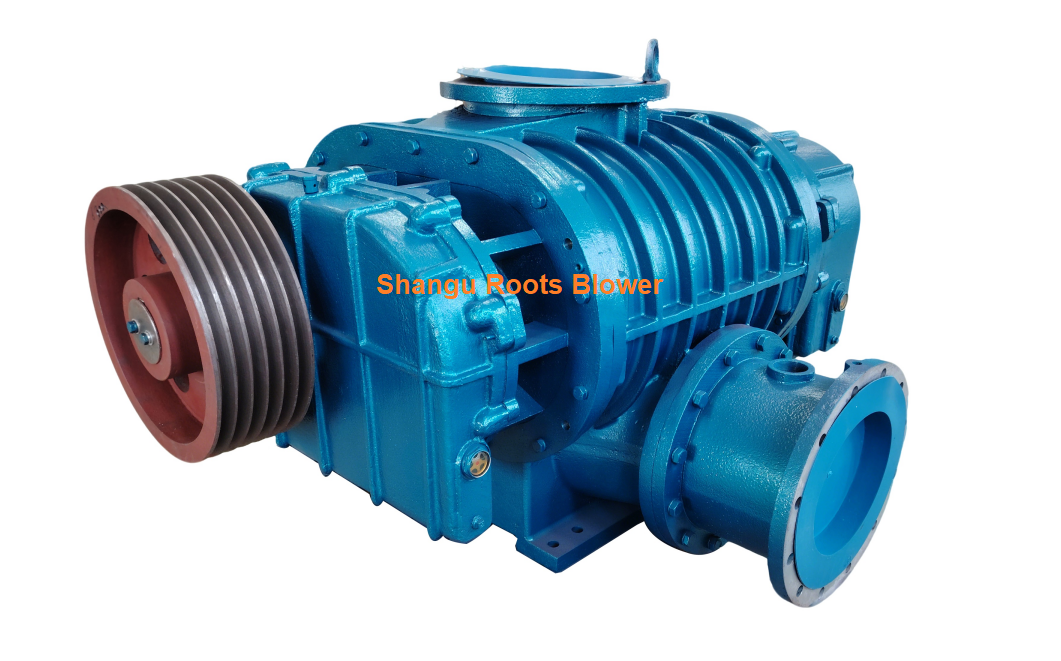
- Blower Types:
- Roots Blowers: Cost-effective, easy to maintain (ideal for small-to-medium plants).
- Magnetic/Air Bearings: Oil-free, energy-efficient (15–30% less power than Roots), but higher upfront cost (best for large, continuous operations).
- Site Conditions: Adjust for altitude (reduce output by 10% per 1,000m elevation) and temperature (-20°C to 40°C operating range). For tight spaces, opt for compact models (e.g., vertical Roots blowers).
- Control Systems: Add variable frequency drives (VFDs) to adjust flow/pressure dynamically, cutting energy use by 20–40% during low-demand periods.
Future Trends in Biogas Blower Technology
- Smart Monitoring: IoT sensors (vibration, temperature) predict failures before they occur.
- Green Materials: Recycled stainless steel and bio-based seals reduce carbon footprint.
- Hybrid Systems: Combine blowers with compressors for long-distance transport (e.g., 5+ km pipelines).
Final Tips for Optimal Selection
- Share site-specific data (gas analysis, flow rates) with manufacturers for custom sizing.
- Prioritize total cost of ownership (TCO) over upfront price—reliable blowers save 30%+ in maintenance.
- Test prototypes in real conditions (e.g., simulate H₂S exposure) before full deployment.
Ready to optimize your biogas system? Need a customized biogas blower selection checklist tailored to your project’s location (e.g., high-altitude farms, coastal wastewater plants)? Let me help you draft one with region-specific compliance tips.
