
Vacuum Pump in Paper Mill – How Roots Vacuum Pump Optimizes Pulp Dewatering on the Rotary Drum
In modern paper mills, the rotary-drum dewatering section sits right after the beating process and before press drying. The mechanism is classic: a rotating drum is surfaced with a fine filtration screen, and its interior is divided into radially arranged cavities. As the drum turns, pulp adheres to the screen; each cavity is timed by a distributor valve to connect first to a roots vacuum pump suction zone—where waste liquor is pulled away from the fiber mat—and then to a blower pressure zone, where the sheet loosens and is finally scraped off by a doctor blade.
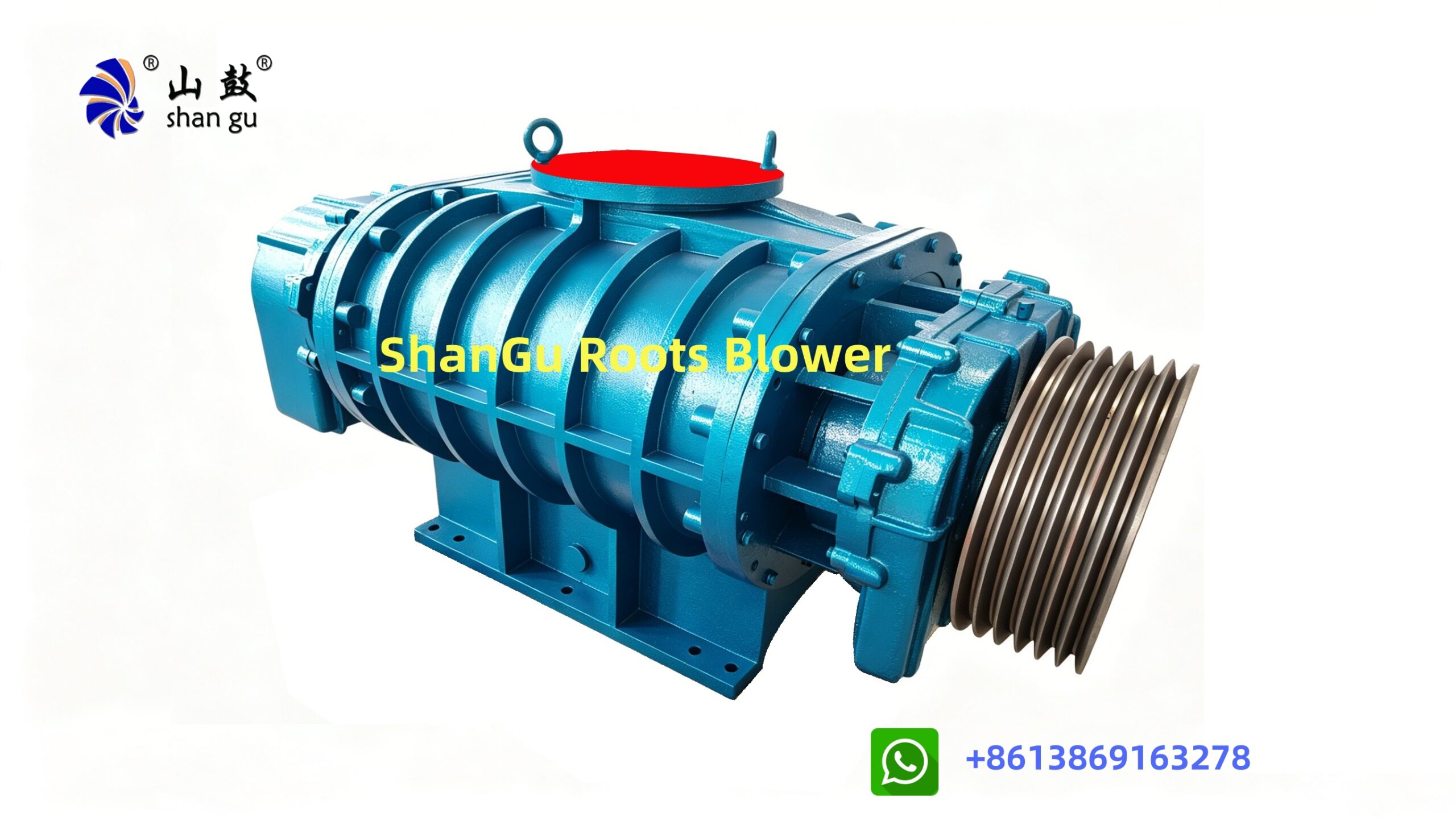
That short window between “adhere → dewater → release” demands three things from the vacuum source: stable medium vacuum, large volumetric flow, and tolerance for moist air / white-water carryover. This is exactly where a roots vacuum pump (also called a positive displacement vacuum pump or roots vacuum blower) outperforms older water-ring solutions.
Why Roots Vacuum Pump Fits the Drum Dewatering Cycle
| Requirement on Drum | What a Roots Vacuum Pump Delivers |
|---|---|
| Continuous medium vacuum under varying load | Positive-displacement principle keeps suction stable across the distributor valve cycle |
| High air/ vapor volume from screen | Large specific pumping speed, especially ZBK / VP paper-duty series |
| Moist air & white-water mist | Cavity runs dry (no sealing liquid needed); rotor cooling via partial gas recirculation |
| Energy cost per ton of paper | 20–30 % lower power vs. equivalent water-ring pump |
| Footprint near the machine | Compact, horizontal layout, easy retrofit |
Unlike a water-ring vacuum pump, a roots blower vacuum system does not consume sealing water and does not need a recirculating water loop with a cooling tower—two hidden OPEX items that paper-plant engineers know too well.
Typical Positions of Roots Vacuum Pump in a Paper Mill
- Rotary washer / brown-stock drum – continuous black-liquor wash-out while pulp rides the screen
- Vacuum dewatering on long-wire / fourdrinier suction boxes – pre-press moisture removal
- Sediment / green-liquor drum filters – particle capture under negative pressure
- Pulp-molding forming table – proportion dewatering before hot-press
In all of these, the pump sees a mix of air, steam, and fine droplet carryover. A properly selected service roots blower or roots-type booster ahead of a backing pump keeps the system in its sweet spot (roughly 30–200 mbar abs), which is exactly the band where drum dewatering lives.
Service & Configuration Notes (Buyer Checklist)
If you are specifying a vacuum pump in paper mill duty, check these five points before issuing an RFQ:
- Gas composition – pulp mills send humid air, slight H₂S in brown-stock washers; confirm corrosion allowance.
- Operating vacuum range – most drum zones sit 50–150 mbar abs; roots + liquid-ring or roots + screw as backing is common.
- Pulp type – virgin wood vs. recycled OCC changes filler/silt load on the screen (affects carryover to the pump).
- Spare & service roots blower availability – lead time and local service matter more than the initial quote.
- OEM customization – impeller coating, shaft-seal choice, silencer package for <80 dBA shops.
Why Buyers Switch to Our Roots Vacuum Pump Line
We supply roots vacuum pumps, roots vacuum blowers, and positive displacement vacuum pumps engineered for paper-duty cycles:
- RSR/MTRF series roots vacuum pump, directly interchangeable with common paper-mill footprints
- Aluminum or FRP impellers for moisture-heavy zones
- Belt- or direct-drive, IP55 / IE3 as standard
- OEM branding, drawings, and performance curves supplied with every inquiry
- Service roots blower program: on-site commissioning, spare kits, rotor-rebuild support
If your plant is still running water-ring pumps on the drum washers, a side-by-side energy comparison usually pays back the swap inside 12–18 months.
💬 Need a preliminary selection for your drum dewatering line?
Send us drum diameter, number of cavities, distributor timing (° of arc in vacuum / blow zone), and target sheet dryness. We’ll return a one-page proposal with a roots vacuum model, backing-pump match, and estimated kWh saving versus your current machine.
