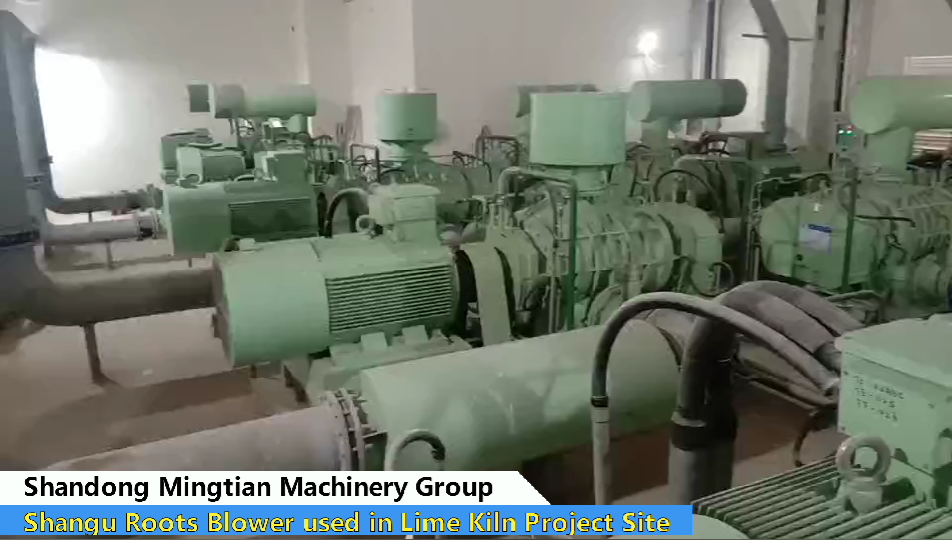
MAERZ Lime Kiln Roots Blower: Core Equipment for Efficient and Stable Air Supply | Technical Analysis and Application Advantages
Maerz Lime Liln Roots Blower, as an important energy saving machine during the lime kiln production process,in the lime production field, the stable operation of the kiln directly determines product quality and energy consumption levels. As the “heart” of the kiln’s air supply system, Lime Kiln Roots blower, with its unique technological advantages, has become the preferred equipment for upgrading modern lime kilns. This article will deeply analyze why the Roots blower can become the efficient power engine for lime kilns from the dimensions of technical characteristics, product parameters, and application value.
1.The Stringent Requirements of Lime Kilns for Air Supply Systems
Lime kilns produce quicklime by calcining limestone at high temperatures. Its core process relies on precise and controllable airflow. A stable oxygen supply must be maintained within the kiln to promote combustion, while simultaneously uniformly dispersing materials, removing heat, and expelling waste gas. This presents three major challenges for the air supply equipment: Constant Flow Rate: During calcination, uneven temperature or fuel waste due to airflow fluctuations must be avoided.
Stable Pressure: Sufficient air supply pressure must be maintained even when kiln resistance changes (e.g., material accumulation).
High Temperature and Dust Resistance:The ambient temperature around the kiln is high (up to 80℃ or higher) and contains a small amount of dust particles.
2.Roots Blower: A Technological Advantage Tailor-Made for Lime Kilns
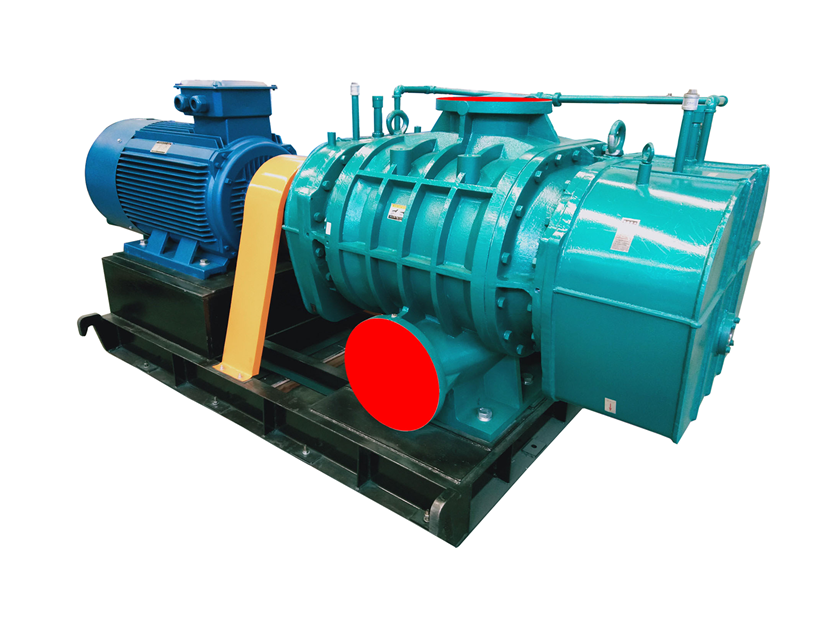
The Roots blower is a volumetric gas conveying device that forces gas delivery through the synchronous rotation of two impellers, perfectly meeting the air supply needs of lime kilns. Its core advantages are reflected in the following five aspects:
2.1 Constant Flow Rate, Ensuring Calcination Stability
The output flow rate of the Lime Kiln Roots blower is only related to the rotational speed (formula: Q=K×n, where K is a constant and n is the rotational speed), and is not affected by changes in pipeline resistance. Even if fluctuations in the material layer thickness within the kiln cause an increase in back pressure, the set airflow can still be maintained, avoiding localized under-burning or over-burning problems caused by a sudden drop in airflow, significantly improving lime activity (high-quality lime activity ≥360mL).
2.2. High-pressure output capability, adaptable to complex working conditions: Lime kilns require air supply from the bottom to exhaust from the top, with duct lengths reaching tens of meters, and must overcome the resistance of the material layer (typically requiring 30-60 kPa pressure). Roots blowers can provide a high-pressure output of 30-98 kPa (depending on the model), and with a multi-stage compression design, easily handle long-distance air delivery needs.
2.3 High temperature and dust resistance, adaptable to harsh environments:
The ambient temperature around kilns is high (up to 90℃ in summer). Roots blowers use cast iron/stainless steel shells and high-temperature bearings (maximum temperature resistance 120℃). Key components (such as the rotor) are precision-machined (gap ≤0.05mm) to resist dust intrusion; some models can be equipped with air filters, extending the service life to over 10 years (compared to approximately 5-8 years for conventional blowers).
2.4 Low energy consumption and high efficiency, reducing operating costs:
Roots blowers boast a thermal efficiency of 85%-90% (centrifugal blowers are approximately 70%), and exhibit no surge (centrifugal blowers are prone to surge at low flow rates). Taking a Roots blower with an airflow of 50 m³/min and a pressure of 49 kPa as an example, compared to a centrifugal blower of the same specifications, annual power consumption can be reduced by 15%-20%. Based on an industrial electricity price of 0.8 yuan/kWh, this translates to annual electricity savings exceeding 100,000 yuan per unit.
2.5 Simple structure and easy maintenance, reducing downtime losses:
Roots blowers do not have a complex oil circuit system (only periodic gear oil changes are required). The modular design of key components such as rotors and gears reduces troubleshooting time by 60%. Some models support online maintenance (without requiring shutdown for purging), maximizing continuous kiln production (a single shutdown and restart of a lime kiln can take more than 48 hours).
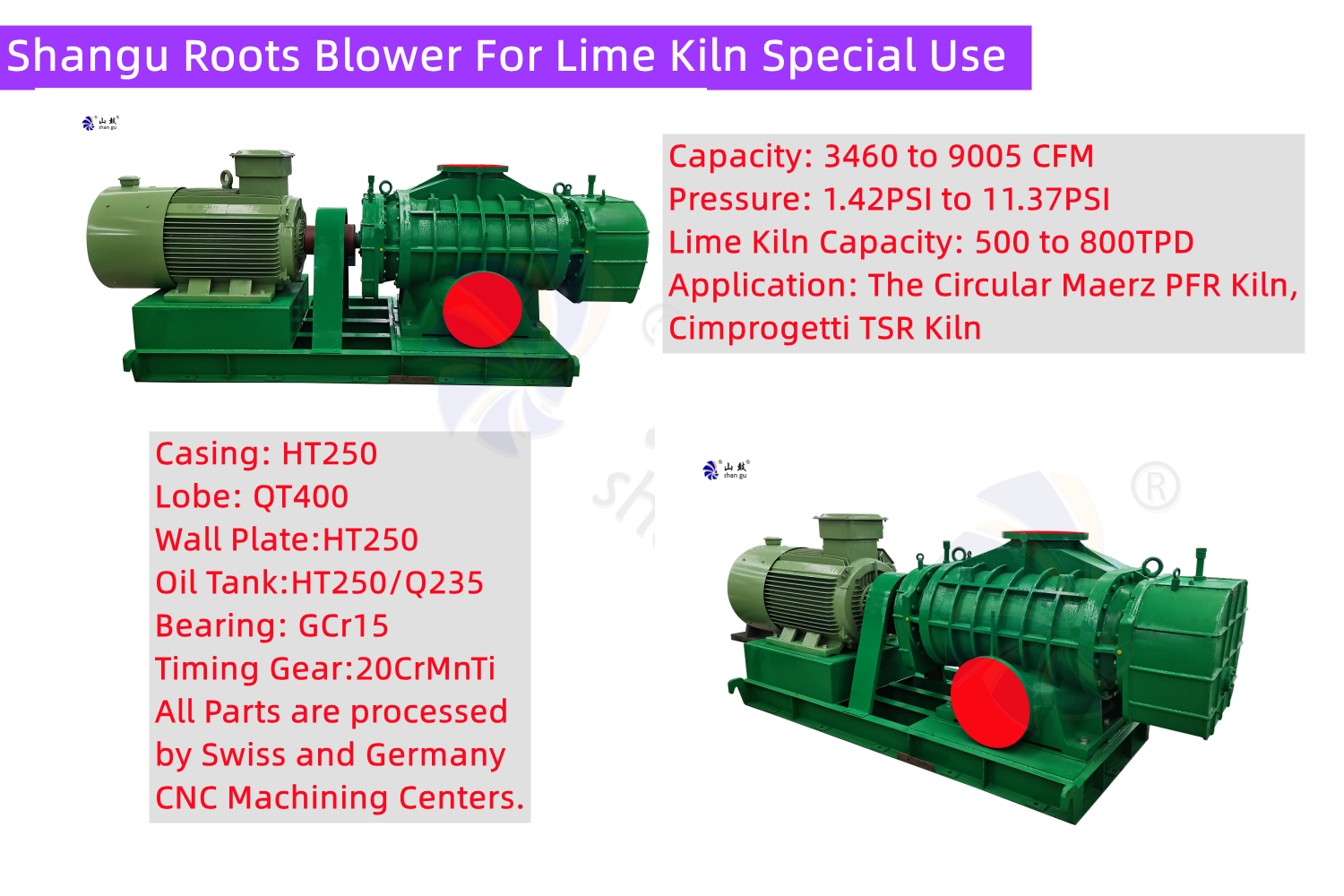
III. Core Parameter Analysis of Lime Kiln Roots Blower When selecting a suitable Roots blower, the following parameters should be given special attention (taking a typical model as an example):
| Specs | Value Range | Lime Kiln Compatibility Instructions |
| Capacity(Q) | 10-300m³/min | For small kilns (200 tons per day), select 10-50 m³/min; for large kilns (1000 tons per day), select 100-300 m³/min. |
| Outlet Pressure(P) | 30-98kPa | For conventional kilns, a pressure of 30-60 kPa is recommended; for high-resistance kilns (such as sleeve kilns), a pressure of 60-98 kPa is required. |
| Speed(n) | 980-1450r/min | Low-speed models (≤1200r/min) have lower noise levels (≤85dB), making them suitable for factories with high environmental protection requirements. |
| Motor Power(Kw) | 7.5-315kW | Estimated using Q×P/(3600×η) (η is efficiency, taken as 0.8), while also considering redundancy to avoid overload. |
| Materials | HT250 Cast Iron/SS304 | Cast iron is chosen for general operating conditions (low cost); stainless steel is chosen for environments with sulfur-containing flue gas (corrosion resistant). |
Lime Kiln Roots Blower Specs
IV. Practical Application Case: How Do Roots Blowers Improve the Efficiency of Lime Kilns?
A lime production enterprise in Shandong Province with an annual output of 500,000 tons previously suffered from unstable lime activity (320-380mL) due to large fluctuations in the air volume of its centrifugal blowers, resulting in a customer complaint rate as high as 15%. After replacing the blowers with Lime Kiln Roots blowers (air volume 80m³/min, pressure 49kPa) in 2022:
The lime activity stabilized at 365±5mL, and the first-grade product rate increased from 75% to 92%;
Blower energy consumption decreased by 18%, saving 230,000 yuan in electricity costs annually;
Equipment downtime due to malfunction decreased from an average of 45 hours per year to 8 hours, and production efficiency increased by 12%.
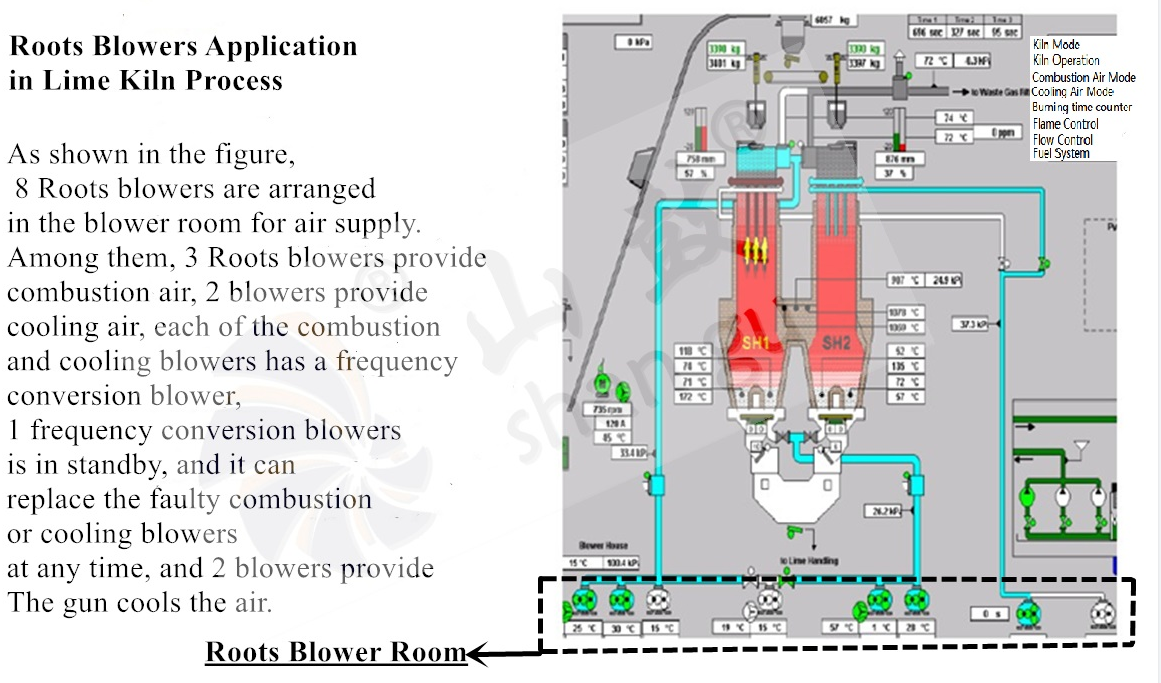
Lime kiln roots blower configuration:
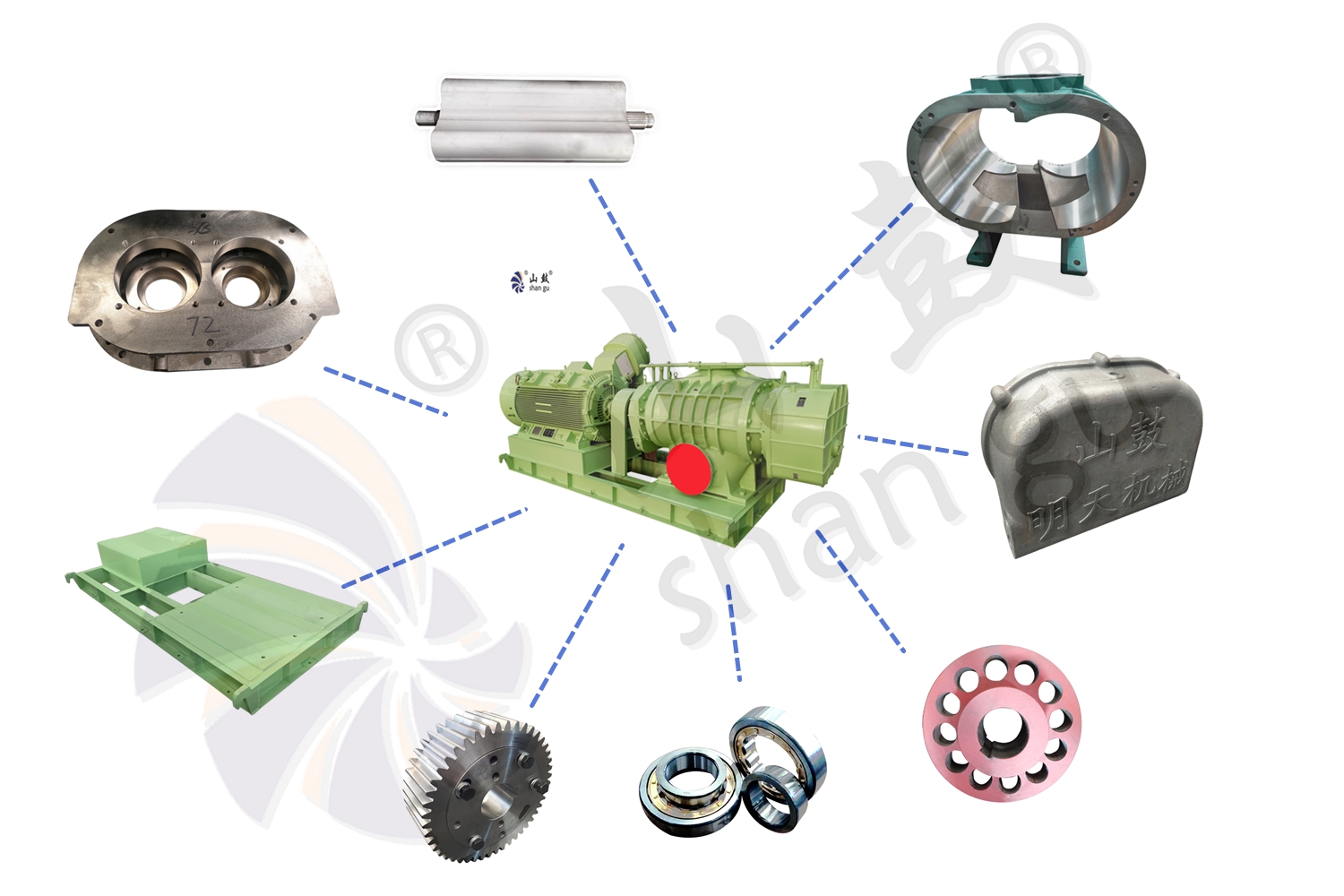
V. How to Choose a Suitable a Lime Kiln Roots Blower?
Matching Operating Requirements: Calculate the required airflow and pressure based on kiln type (vertical kiln/rotary kiln), capacity (daily output), and pipeline resistance;
Focusing on Energy Efficiency Rating: Prioritize IE3 or higher high-efficiency motors, paired with frequency converters to achieve variable flow regulation (energy savings of 10%-30%);
Assessing After-Sales Service: Choose suppliers that provide localized maintenance teams and backup machine support (e.g., 24-hour fault response);
Verifying Material and Manufacturing Process: Check rotor dynamic balance accuracy (G2.5 grade or higher) and gear meshing clearance (≤0.03mm) to ensure long-term stable operation.
Against the backdrop of the lime industry’s transformation towards green and intelligent manufacturing, Roots blowers, with their core advantages of “constant flow, high pressure stability, and low energy consumption,” have become standard equipment in lime kiln air supply systems. Choosing a suitable Roots blower can not only improve product quality and production efficiency but also create significant economic benefits for enterprises through energy saving and consumption reduction. If you are planning to upgrade your lime kiln, consider starting with a high-performance Lime Kiln Roots blower!